
Money Stories · Original fiction · 10 minute read
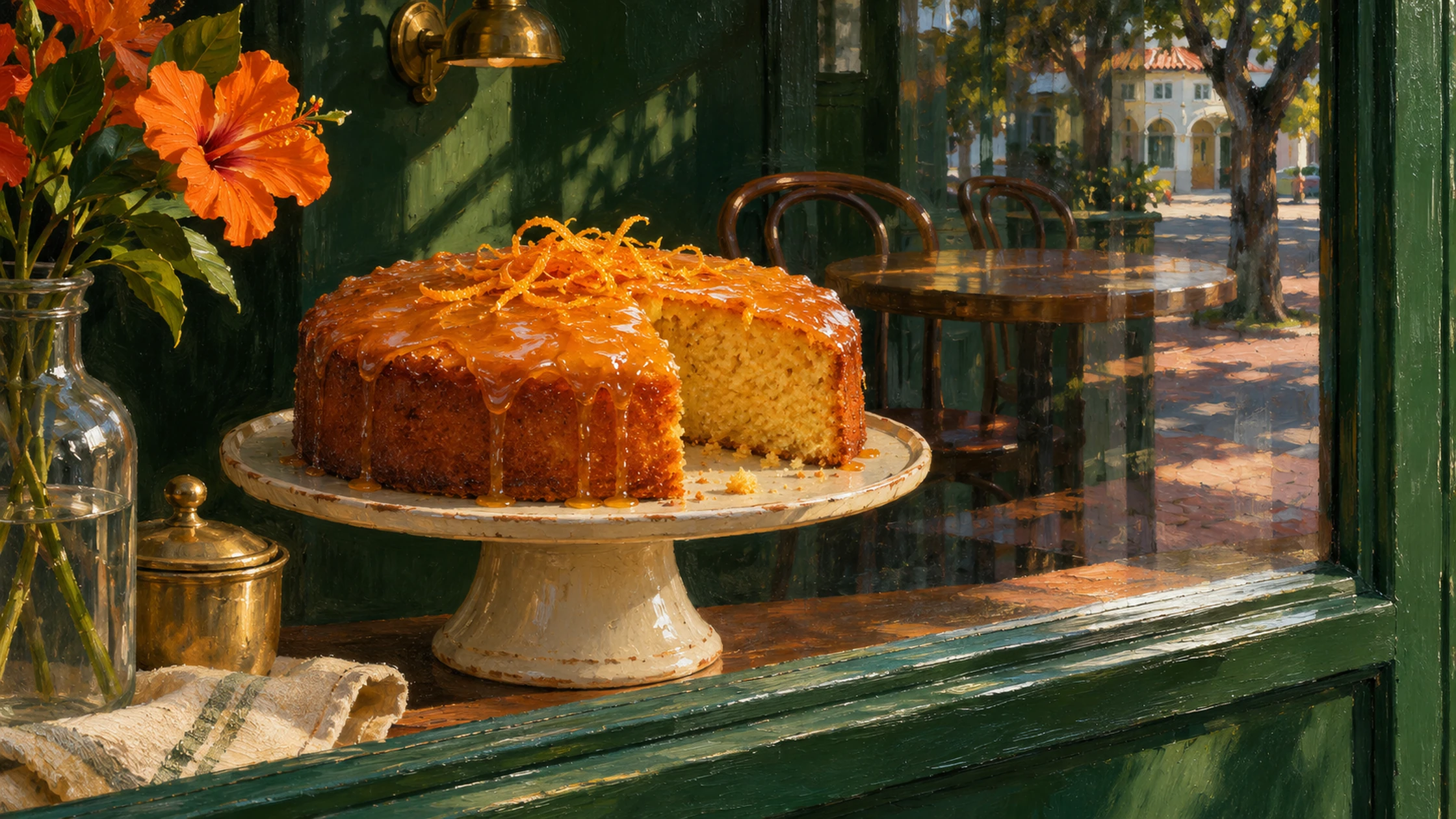
The cake had outlived three descriptions of itself. At nine it was orange and almond. At eleven it was freshly baked orange and almond. By two, Aunt Yasmin was calling it the last of the orange and almond, although twelve slices remained.
“Last of this particular cake,” she explained.
Farah removed the handwritten card.
“You’re frightening people into buying things.”
“They look very calm to me.”
At the nearest table, Mr Dube turned a page of his newspaper. He had been drinking one pot of tea for forty minutes. His second cup was upside down on its saucer, waiting for somebody.
Farah owned the little Durban café with her aunt. They agreed about the coffee, the colour of the dark green window frames and the difficulty of finding someone who would repair the back door without explaining their entire marriage. About Sunday cake they had begun communicating through the placement of objects.
Farah put the sales sheet beside the cake tin. Yasmin put a fork on the sales sheet.
Their stock-planning assistant had acquired a family nickname, Sift, which Yasmin disliked because sifting was work she did herself. It could read the café’s sales exports, group them by day and suggest what to prepare. Farah checked its figures before approving orders; it could not buy ingredients or change the menu.
Its latest Sunday recommendation was simple: stop baking the large cake.
They had made sixteen portions on each of the previous three Sundays and sold four, six and five. The records said nothing about why anyone had bought them. With twelve portions still under the glass today, the assistant doubted that a sudden crowd was coming.
Yasmin had taken some home. Sbu, their paid Sunday assistant, had taken some to his flat. Too much had gone in the bin. Farah had stopped asking which portions were which because both answers seemed to begin an argument.
“Five people is five people,” Yasmin said.
“Then why are we baking for sixteen?”
“Because a cake cut into five is a threat.”
Mr Dube lowered his paper. “I would support six.”
Farah had wanted a café since she was nineteen. At nineteen, she imagined that owning it meant choosing the cups. Now she knew it also meant listening to the fridge at midnight and trying to decide whether a noise had become an invoice.
Her aunt had helped buy the second-hand equipment. They both worked and both took the agreed drawings the café’s ordinary budget allowed. Sbu’s wages were paid for his scheduled hours whether the cake sold or not. Nobody was being asked to work for the privilege of keeping a family custom alive.
The cake was not ruining the café. It was doing something smaller and therefore easier to excuse.
Each large cake used three hundred rand in ingredients and additional baking energy. They charged thirty-five a slice. Tea and sandwiches earned their own money. Farah would not put imagined extra tea sales into the cake column merely because the cake stood near the kettle.
“There are things you can’t put in a column,” Yasmin said.
“Then tell me what they are.”
“I have told you.”
“You’ve said Sunday.”
Yasmin wiped a clean section of counter. Outside, a man tried to persuade a large dog to pass a small puddle. Neither appeared willing to concede the principle.
The door opened. A girl of about twelve came in carrying a folded umbrella longer than her arm. Mr Dube stood so quickly that his newspaper slipped to the floor.
“You came.”
“Mom’s parking.”
He turned the second cup over. The girl examined the cake and asked whether the orange bits on top were necessary.
“They are decoration,” Yasmin said.
“Then can they decorate his?”
Mr Dube ordered one slice and two forks. It was the fifth and last portion sold that day. The girl moved every strip of peel to his side of the plate with the care of a person drawing a border.
Farah had seen the upside-down cup before. She had thought it was something he did to keep the table.
When they left, his newspaper remained under the chair. Farah picked it up and found a pencilled puzzle almost completed. One square was blank.
“He sometimes waits until we close,” Yasmin said.
“Why didn’t you tell me?”
“He didn’t tell me to tell you.”
“Does he buy cake when she doesn’t come?”
“No.”
It was an answer Farah needed, though not the one she wanted. His waiting did not put thirty-five rand in the till.
The following morning they talked before opening, with Sbu eating toast at the end of the counter. Four Sundays had now brought in seven hundred rand from twenty slices, against twelve hundred in direct cake costs. A five-hundred-rand gap, before wages, rent or either woman’s time. Forty-four portions had not been sold. Yasmin said three regulars had mentioned possible visits from grandchildren or nieces. None had promised a purchase. One liked knowing that the cake was there and never ordered it at all.
“I like knowing there’s a swimming pool at the expensive hotel,” Sbu said. “I accept they shouldn’t build another one for me.”
Yasmin pointed her butter knife at him. “You are twenty-three. Leave some opinions for later.”
Farah asked whether keeping cake meant keeping a large cake, and whether every slice had to wait for an unexpected visitor. Yasmin said the small tin was in the cupboard behind the cups nobody liked.
They brought it out. A cake from it would make eight proper portions. Using the same recipe at the smaller size, they priced the ingredients and additional energy at one hundred and sixty rand. They already owned the tin. Preparing it fitted within their existing Sunday hours; Sbu would not lose pay, and neither woman was claiming her own time had become free.
Farah put the new cost beside the old one. Yasmin put the small tin on top of both.
“People must be able to come without making an appointment with a sponge,” she said.
They agreed to take reservations by Saturday afternoon, without advance payment, and keep at least two portions unreserved, accepting no more than six reservations. A reserved slice would be held until the agreed collection time; after that it could go back on sale. They would explain this when taking the name, not when somebody arrived late.
“Do we ask who they’re waiting for?” Farah said.
“No,” Yasmin and Sbu said together.
Farah had not meant to. She was glad they answered so quickly.
They would try the smaller cake for four Sundays. The six hundred and forty rand for all four could come from existing, uncommitted working money; reservations were not receipts. Every week they would record portions made, collected, sold without a reservation and left over. They would also record whether leftovers were eaten by staff or discarded. Neither would count as a sale. If the four cakes failed to cover their direct costs, they would change the plan again; even a positive contribution would not by itself pay all the café’s bills.
Farah asked Sift for a likely sales range using the new reservation counts and past Sundays. Then she entered their preparation rule separately: one eight-portion cake for this trial, with room for walk-ins. It could warn her about a likely shortfall. It was not being asked to report eight likely customers simply because they had decided to bake eight portions.
On the screen, the forecast stayed below the preparation quantity.
“There,” she said. “It still disagrees with us.”
“Good,” Yasmin said. “Somebody should.”
The first small cake looked almost rude on the old stand. Yasmin moved it to a smaller plate and said the stand had always been too large.
Five reserved slices were collected and paid for. Two people bought without reserving. The remaining piece went home with Sbu and was marked as staff food. He declined to have “staff food” written on the box.
The second Sunday brought six collected reservations and one walk-in sale. One slice was discarded. Yasmin recorded it herself, pressing so hard that the number appeared on the next sheet.
On the third, four reservations and three unreserved purchases left one again. That portion also went in the bin. Mr Dube had not visited. Farah caught herself checking the weather as if it might give a sufficiently tidy explanation for his absence.
There were other customers, other products and other reasons to open the door. A woman came in to practise ordering coffee in a language she was learning. A courier ate standing up until Sbu persuaded him that the chair would not charge extra. Someone returned a cup they had taken by accident and brought the wrong saucer with it.
The cake remained one item in a working café. On the third Sunday the dishwasher needed attention. Its bill did not become a cake expense, but the money to pay it still had to exist.
By the fourth week Farah had stopped arranging the sales sheets where her aunt was most likely to trip over them. They sat together to fill them in. Yasmin had begun correcting her arithmetic without making a small noise first.
That Sunday, five reserved portions were collected. Near closing, Mr Dube arrived with the girl. She was wearing a school blazer over a T-shirt and carrying an enormous drawing folder. He ordered one slice, their only unreserved sale of the day.
“Orange bits?” Yasmin asked.
The girl considered the cake. “I can move them.”
Six paid portions. Two left. Yasmin boxed the last two for herself and Sbu, and Farah wrote them under staff food. Nobody put money through the till to improve the result.
They had sold twenty-seven portions from thirty-two. At thirty-five rand each, nine hundred and forty-five rand had come in. The four cakes had cost six hundred and forty. Three hundred and five remained towards the costs that had not gone away. Five portions were unsold: three eaten by staff, two discarded.
“Better,” Yasmin said.
“Yes.”
“Not a fortune.”
“No.”
They agreed to continue for another four Sundays, with the same record and another review. Four weeks had not discovered what every Sunday would do. Farah kept the unused line for losses on the sheet.
At the window, Mr Dube and the girl were arguing over her drawing. She had designed a house on very tall legs. He thought the stairs would be tiring. She said there would be a lift, obviously, and asked why he always made everything ordinary.
Farah turned the little card to face the street. Orange and almond. There was no need to say last.
As Yasmin wiped the table beside them, the girl called her over and pointed at a large rectangle in the drawing.
“That’s your window.”
“You’ve given me a bigger shop?”
“No. That’s the same shop. I’ve made everything else smaller.”
Yasmin looked at the rectangle for a moment. Then she asked where the back door was, because that, she said, needed work.
Money behind the story
Hyndman and Athanasopoulos distinguish forecasting expected outcomes from setting targets or planning supply. They recommend recording assumptions and evaluating outcomes. Farah preserves a cautious forecast while explicitly choosing a limited preparation experiment; the software does not discover the emotional value of Sunday by itself.
The fictional baseline is 64 portions made and 20 sold across four Sundays: 20 × R35 = R700 received against 4 × R300 = R1,200 in ingredients and additional baking energy, a R500 shortfall before other costs. The smaller-cake trial makes 32 portions and sells 27: R945 received − R640 direct costs = R305 towards unchanged costs. Of five unsold portions, staff eat three and two are discarded. Neither disposal nor a staff gift creates revenue.
ACCA’s relevant-cost guidance helps distinguish changed cash flows from committed costs. Existing wages, owners’ work and fixed bills remain; R305 is not net profit. The illustration assumes cash sales, no separate payment-processing charge and no VAT registration, without asserting a tax entitlement. Reservations are unpaid until collection; existing working cash funds production.
Four observed Sundays cannot isolate why sales changed or establish reliable future demand. The café records made, reserved, sold and unsold quantities and reviews again. The story claims neither a proven forecasting improvement nor a guaranteed return from preserving a custom.
Financial sources checked 25 November 2026. Story figures and outcomes are illustrative. General financial education, not individual financial advice.
Stay with the story: three questions
- What purpose does a familiar expense serve, and have the people sharing it agreed on that purpose?
- Which of your numbers describe money actually received, and which describe hopes, reservations or gifts?
- What small, affordable experiment would let you compare a plan with what really happens without committing indefinitely?



