
Money Stories · Original fiction · 10 minute read
The first window
The coat in the window had pockets deep enough to put a whole hand into without making a fist. Vesna tried them when the assistant invited her inside. She had come to look at the price, but the assistant treated looking as a respectable beginning.
“Lift your arms,” the woman said.
Vesna did. The lining moved without catching. The collar stood around her neck instead of folding away from it. Against the shop's plum-coloured wall, the dark wool looked almost silver.
Her colleague Sanja stood behind her in the mirror.
“That's the one,” Sanja said.
It was late October in Belgrade. They had finished a night cleaning trams and were carrying the unsteadiness of morning in their knees. The coats they were choosing were for the journeys to and from work, for shopping, for standing outside other people's buildings waiting to be let in.
The price was 13,200 dinars. Vesna had 4,800 available for a coat and everything else until payday. She had already reserved the rent and bills in another account. There was no forgotten amount somewhere waiting to be discovered by better subtraction.
“You'll wear it for years,” Sanja said.
“I might.”
“It works out cheaper.”
Vesna looked at their reflections. Sanja had spent three winters saving for the boots she was wearing; she took care of things. She was not trying to make Vesna feel foolish. That made it harder to tell her that the useful part of the advice was somewhere on the far side of 8,400 dinars.
“I still have to buy it today.”
The assistant released the collar gently. Vesna thanked her and put her own thin jacket back on. Outside, Sanja began searching her phone for the same coat at another price. She was a good friend and sometimes a tiring one.
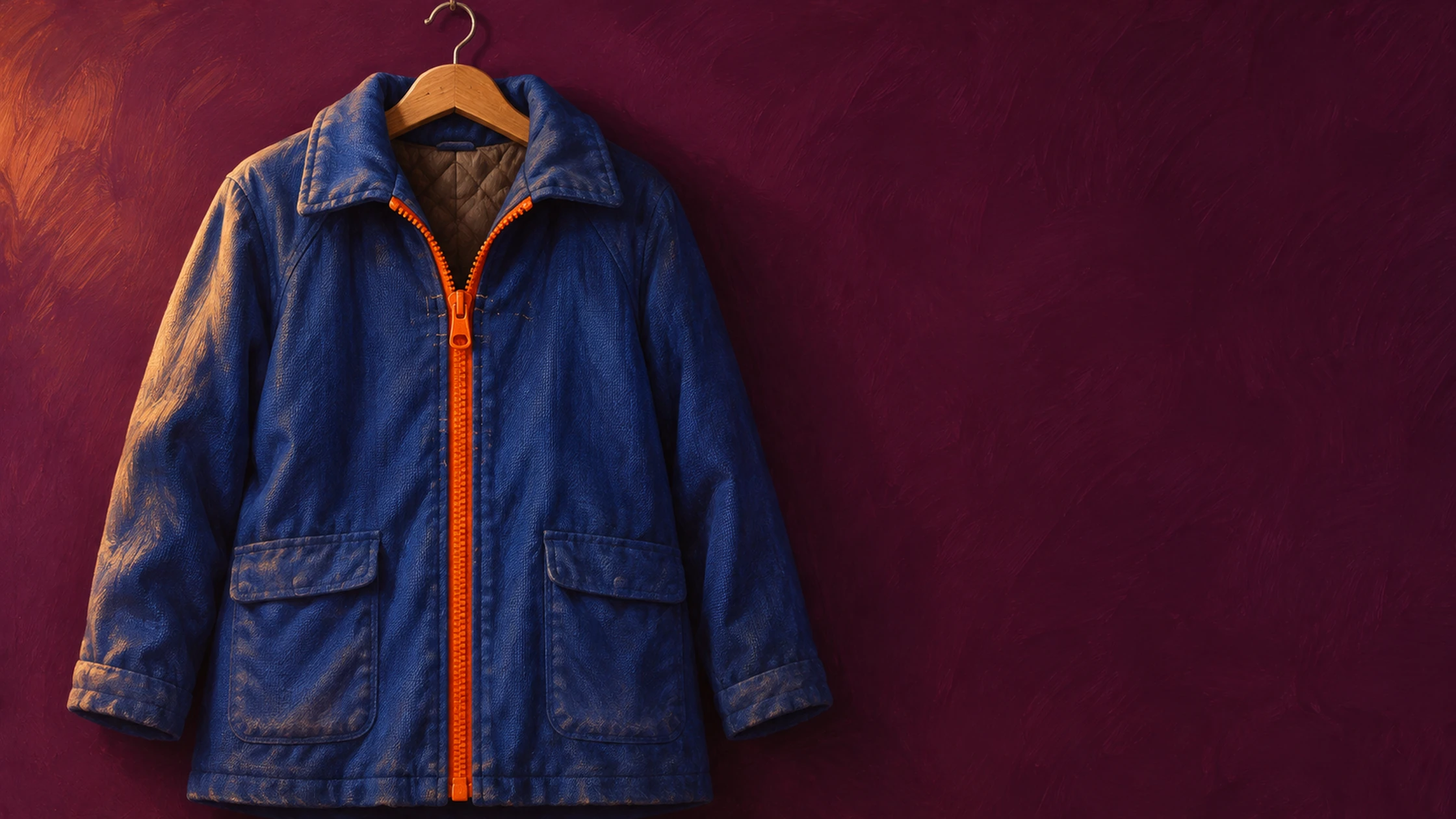
In a smaller shop two streets away, Vesna found a cobalt coat for 4,200. The padding was thinner, the pockets shallower. It closed. She sat on a stool, reached forward and turned her shoulders. Nothing pulled. She worked the zip twice.
“A useful colour,” Sanja said.
“It isn't useful. I like it.”
Sanja laughed and put down the phone.
Vesna bought it. The remaining 600 dinars went on groceries before payday. She kept the receipt, folded once, in the drawer with her spare keys. She did not calculate how many winters the coat would last. She was thirty-four and had learned the difference between a hope and a receipt.
On the walk home she caught her reflection in a bus shelter. The blue looked startling after a year of brown and grey. For several days she felt slightly overdressed to buy bread. She enjoyed that.
The second window
Six weeks later, the zip divided behind the slider while Vesna was waiting outside the depot. She tried taking it down and beginning again. The two sides met, travelled together for a few centimetres and separated at her stomach.
She held the coat closed all the way home. It was an awkward task to give one hand for so long. At a crossing she transferred her shopping bag to the other wrist and felt the cold enter before she could catch the fabric again.
Sanja saw the failed zip the next morning.
“You see,” she began, then stopped.
“Yes,” Vesna said. “I'm standing inside the evidence.”
Sanja reached for the slider, but Vesna moved back.
“Don't pull it. I'll take it to the shop.”
They passed the first window on their way. The wool coat now cost 9,900 dinars. A neat red card announced the reduction. Vesna stood looking at it while the people behind her divided around her shoulders.
“That's a good price,” Sanja said, more cautiously.
It was 3,300 less than before. It was still money Vesna did not have available. The sale had arrived at the right shop and the wrong part of her life.
She wanted to dislike the coat. Instead she remembered the pockets.
At the smaller shop, she showed the assistant the fault and the receipt. The woman photographed the zip and recorded the complaint, giving Vesna a copy with its number. She did not tell her that the price made the failure acceptable.
Vesna went home in a cardigan beneath the unfastened coat. Her neighbour Danica met her on the landing carrying the legs of a small wooden table, each wrapped in newspaper.
“Has it become a cape?” Danica asked.
Vesna showed her the zip.
Danica had made theatre costumes for years. She examined the teeth without forcing them together. She could replace the whole zip, she said, but Vesna should finish the conversation with the seller first.
“Don't let me make a new problem while they're looking at the old one.”
The table was for Danica's sister, who had moved into the flat one floor above. Danica wanted help carrying its top and two chairs on Saturday. Vesna said she could help. Danica said they would discuss the coat after the shop replied.
The reply came two days later. The manager accepted that the zip was faulty. There was no replacement in Vesna's size; the shop could take the coat back and refund all 4,200. Its usual repairer was unavailable. Vesna asked whether they would instead agree to reduce the price and let her keep it for a repair she could arrange herself.
She did not accept the first suggestion immediately. She called Danica and asked what the work would involve.
“Four hundred for the new zip and thread,” Danica said. “My work for your Saturday. If that suits you.”
It did. Vesna had been ready to carry the table without a bargain. Hearing Danica name her own work made it easier to name the help in return.
The manager agreed to a 1,000-dinar reduction. Vesna went back, collected the money and kept the coat. The receipt recorded the particular zip complaint and the agreed reduction. She put it beside the original purchase receipt. There was no pretend return and no full refund hidden in the calculation.
From the 1,000 she gave Danica 400 for the materials. The other 600 went into an envelope. On it she wrote Coat, then added Later, because she did not want to open the drawer every morning and find another instruction to buy something.
Danica offered her a choice between waiting for a blue zip or using the orange one she had found in the right length. Both would cost the same.
Vesna laid the orange against the cobalt fabric. It was brighter than anything she normally chose. For a moment she imagined Sanja examining it for evidence of economy.
“Orange,” she said.
On Saturday they removed the table's remaining fittings, wrapped the top and carried it up together. At the turn, Vesna had to lower her end while Danica backed through the doorway. Danica's sister directed them from the wrong side until all three began laughing.
The two chairs followed. They fitted the legs again and helped move the old table aside. By the time they stopped, two hours had passed. Vesna had planned to sleep until noon. She sat for tea instead, her forearms marked by the blanket that had protected the wood.
Danica's sister placed a plate on the new table and turned it experimentally, as if checking whether an ordinary meal might behave differently there.
“Better,” she decided.
Downstairs, Danica unpicked the old zip. Vesna watched a line of tiny holes appear along the opening. Without its fastener, the coat looked unfinished rather than ruined.
“You can go to bed,” Danica said.
Vesna stayed until the first orange edge was pinned. Then she went upstairs and slept while daylight pressed against the curtains.
That evening she collected the coat. Danica had reinforced the stitching at the bottom, where the two sides met. She showed Vesna how the new slider seated, then made her try it herself.
The zip closed with a different sound, more definite than the old one. It did not make the padding thicker. When Vesna stepped outside, she could still feel the wind through the shoulders. She went back for a woollen layer and put it on underneath.
Sanja saw the orange the following night.
“I like that.”
Vesna waited, guarding herself against the rest of the sentence.
There was no rest.
Later, while they were cleaning a line of seats, Sanja said she had been thinking about the shop window.
“My sister gave me half the money for those boots.”
“You don't have to defend your boots.”
“I know. I kept forgetting that part when I told you about them.”
Vesna pulled a sweet wrapper from beneath a seat. She smoothed it before putting it in the waste bag, an unnecessary habit she had never managed to stop.
“They are good boots,” she said.
“They are.”
They worked down opposite sides of the tram. For once neither of them was advising the other.
The third window
By January, the wool coat had gone. A lighter jacket occupied its place, surrounded by paper flowers too early for the weather outside. Vesna stopped because the plum wall had made her remember the feel of the pockets.
Sanja was buying coffee next door. Vesna could have waited inside. Instead she watched a woman in the shop try the new jacket, lifting her arms when the assistant asked.
Vesna's envelope held 900 dinars: the 600 remaining from the reduction and 300 she had added after her latest payday. She had not promised herself a monthly amount that would be impossible the first time a bill changed. The money was a beginning, small enough to lose to another need. Naming it did not protect it from the world.
The repaired coat had cost 4,200, less the 1,000 returned, plus 400 for materials. Three thousand six hundred dinars in cash, and her Saturday help. She could account for those things. She could not yet say how many winters she had bought.
The expensive coat might have lasted longer. It might have kept her warmer. Nothing about the orange zip disproved either possibility. It had allowed her to keep wearing this one while leaving a little money available for what came next.
Sanja emerged with two coffees. Vesna took hers and put her free hand in a shallow pocket, curling her fingers around the keys.
“Were you looking again?” Sanja asked.
“Remembering.”
They walked towards the stop. On the other side of the road a child in an orange hat was trying to catch up with a woman carrying a shopping trolley. The child pointed at Vesna's zip as they passed each other. She raised her cup in solemn acknowledgement, and he grinned.
At the stop the wind came between the buildings. Vesna fastened the coat to her chin and moved closer to the wall. It was still colder than she would have liked. When the tram arrived, she let Sanja climb in first, then lifted her blue sleeve and followed.
Money behind the story
A lower expected cost over several years does not remove the need to pay today’s price. The fictional alternatives cost RSD13,200 and RSD4,200. Vesna has RSD4,800 available; buying the cheaper coat leaves RSD600 for groceries. The later RSD9,900 sale price remains beyond her available coat money. Neither price proves how long a particular garment will last.
After her complaint, Vesna chooses a specific agreed RSD1,000 price reduction and keeps the coat; a full return and refund was also offered. RSD400 buys repair materials. Her net cash cost is therefore RSD4,200 − RSD1,000 + RSD400 = RSD3,600, plus two hours of help exchanged for sewing labour. That time is a real contribution, not a zero-cost repair. The remaining RSD600 refund money and a later RSD300 contribution make the RSD900 replacement fund.
Serbia’s 2026 Consumer Protection Law, particularly Articles 56, 59 and 63, provides remedies and a complaint process for nonconforming goods; applicable conditions matter. A cheap purchase does not erase those protections. The Ministry’s consumer portal provides complaint and dispute-resolution routes. This autumn-2026 purchase and negotiated outcome are invented, not a ruling or a recommendation to accept a particular remedy. Prices and durability are assumptions. Sources checked 26 November 2026.
Financial sources checked 26 November 2026. Story figures and outcomes are illustrative. General financial education, not individual financial advice.
Stay with the story: three questions
- When advice compares costs over several years, what does it assume about the money available today?
- What would you want to know about a consumer remedy before choosing repair, replacement, a reduction or a refund?
- How would you recognise the time and skill in a repair without pretending that every contribution has an agreed cash price?



