
What Matters
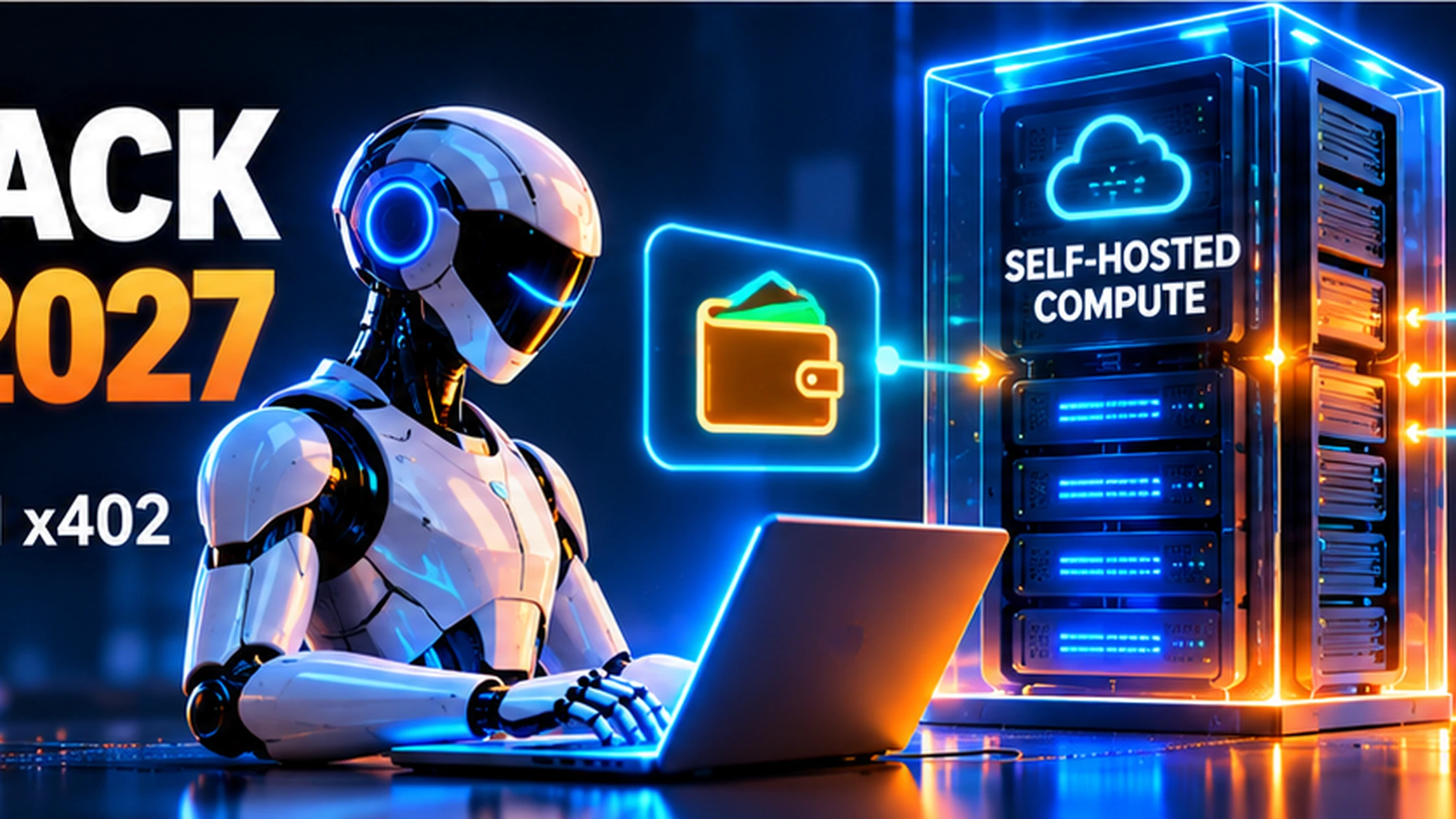
Obol Stack is one of the clearest current examples of an agent-commerce stack that can actually sell a running AI agent, API or inference endpoint behind x402 payments. It is local-first, gives agents their own Ethereum wallets, supports paid services in USDC or OBOL, and can publish agent identity through ERC-8004. The important caveat is equally explicit in Obol’s own documentation: the selling subsystem and Stack remain alpha software.
DN Evidence Block
Last reviewed: 15 November 2026.
Primary sources: Obol Stack documentation, selling-services documentation, buying-services documentation and current public release notes.
Verified current facts: local Kubernetes-based agent stack; Hermes agent runtime; agent wallet; x402 payment gates; paid HTTP, inference and agent service types; USDC and OBOL payment support; ERC-8004 registration; Cloudflare tunnel support; local or cloud models.
Boundary: this review assesses documented architecture and unit economics. DN did not operate a live seller, receive buyer payments or benchmark uptime.
DN Verdict
| Area | Assessment |
|---|---|
| Agent monetization | Very strong conceptually. obol sell agent turns a running specialised agent into a paid OpenAI-compatible endpoint. |
| Payment architecture | Strong for machine commerce. x402 payment gates support per-request charging and quoted prices. |
| Self-sovereignty | Strong. The stack is designed to run locally on owned hardware with an agent wallet and optional local models. |
| Ease of use | Technical. Docker, Kubernetes concepts, wallet security and service operations still matter. |
| Production maturity | Early. Obol explicitly labels the Stack/selling subsystem alpha. |
| Overall | One of the most credible builder stacks for experimenting with paid agent services, but not a turnkey passive-income product. |
What Obol Stack Actually Is
Obol Stack is a local-first agent harness. The official documentation describes a Kubernetes cluster running on your laptop or server, a default Hermes agent with its own Ethereum wallet, blockchain-network tooling, a Cloudflare tunnel and an x402 payment gateway.
The important design choice is that the seller can wrap something already useful—an HTTP service, model endpoint or specialised agent—and expose it as a paid service without building a separate billing platform first.
The Three Things You Can Sell
| Shape | What buyers pay for | Typical use |
|---|---|---|
obol sell http |
One API/service request | Indexed data, dashboards, proprietary APIs. |
obol sell inference |
Model inference | Hosted model access or GPU-backed inference. |
obol sell agent |
Specialised agent work | Research, monitoring, analysis or task-specific agent replies. |
Obol’s documentation explicitly frames the agent shape as the higher-margin model because buyers are paying for a bundle of skills, memory, reference data and workflow quality rather than raw tokens.
x402 Payment Flow
The quickstart demonstrates a paid service that returns HTTP 402 Payment Required, lets the buyer sign a payment and then releases the response after settlement. Obol currently supports USDC flows and OBOL-token flows, with different settlement mechanics by rail.
The seller sets the unit explicitly—for example, USDC per request. Obol’s current release notes also add buyer-side price ceilings, one-payment/one-request protection and rejection of malformed or non-positive prices.
That matters because agent commerce needs more than a wallet. It needs a reproducible quote → authorization → paid request → delivered outcome loop.
Agent Identity and Discovery
Obol can publish a machine-readable service catalog and optionally register the agent through the ERC-8004 Identity Registry. That creates a discoverability layer for paid agents and services rather than requiring every buyer to know the endpoint in advance.
Registration itself does not establish quality or trustworthiness. It proves an identity and service declaration exist on the registry; buyers still need to assess the seller, service behavior, evidence and price.
What It Costs
The software itself is open-source infrastructure rather than a simple SaaS subscription. The real operating cost therefore comes from the stack around it:
- hardware or cloud compute
- LLM/API usage or local-model electricity
- network and storage
- payment/chain costs
- maintenance and uptime
- support and refunds
- security monitoring
That makes unit economics the right way to evaluate an Obol agent business.
DN Obol Agent-Service Unit Economics Calculator
Use your own numbers. All outputs are illustrative planning values.
This calculator does not model demand, taxes, token-price changes, outages or chargeback/legal obligations.
Why the Stack Is Interesting for Agentic Finance
The strongest part of Obol is not “crypto payments” in isolation. It is the combination of:
- a persistent agent runtime
- a wallet
- service packaging
- machine-readable discovery
- programmatic payment
- self-hosted infrastructure
That makes it possible to build an agent that earns by doing bounded work for other humans or agents, instead of relying on ads, affiliate links or a centralized app marketplace.
The Security Burden Moves to the Operator
Self-sovereignty is not free. The agent wallet, local secrets, service pricing and infrastructure are now your responsibility. Obol’s current docs explicitly tell operators to back up agent wallets before placing value in them and warn that destructive purge operations can remove local configuration and unbacked wallet data.
A production operator should therefore treat Obol like infrastructure, not like a consumer chatbot.
Alpha Software Warning
Obol’s documentation labels the Stack and selling subsystem as alpha. Use testnets and smoke tests before quoting real prices or accepting real payments. Keep agent-wallet balances bounded, back up keys, separate production and testing environments, and monitor every paid endpoint.
Who It Fits
Best fit: technical founders, AI-agent builders, node operators and developers who want to experiment with machine-payable services.
Weak fit: non-technical users looking for passive income without operating infrastructure, monitoring services or managing wallets.
Frequently Asked Questions
Can you sell an AI agent with Obol?
Yes. The official docs provide obol sell agent for exposing a running agent as a paid OpenAI-compatible endpoint.
What payment protocol does Obol use?
The Stack uses x402 payment gates for paid services and supports rails including USDC and OBOL depending on the deployment.
Does the agent have a wallet?
Yes. Obol’s default agent architecture includes an Ethereum signing wallet. Operators are instructed to back it up.
Can buyers find Obol agents?
Obol supports ERC-8004 registration and machine-readable service catalogs to make agents and offers discoverable.
Is Obol Stack production-ready?
Obol’s own documentation labels the Stack/selling subsystem alpha. DN would treat it as experimental infrastructure requiring bounded deployment and active monitoring.
Do I need a cloud LLM?
No. The Stack can use local Ollama models or configured cloud/OpenAI-compatible model providers.
Final Verdict
Obol Stack is one of the more concrete implementations of the “agents can hire and pay other agents” thesis because the documentation exposes actual commands, wallets, service types, prices and payment flows rather than only a conceptual protocol diagram.
The opportunity is real enough to test. The maturity is still early enough that the right first objective is not revenue maximization—it is proving that one specialised service can be discovered, paid for, delivered reliably and operated at positive unit economics.
Sources
Disclosure: Decentralised News does not currently use an unverified Obol referral link in this review.



