
DN 2027 Research Desk · Decision record N036 · Reviewed 25 November 2026
A pension increase, rent review or supplier invoice cites an inflation percentage. The recipient checks the newest CPI release, gets a different figure and suspects a mistake. The contract may have specified a lagged reference month, a different series or a floor and cap.
What Matters
The legally relevant increase is the formula in the agreement applied to its identified series and observation dates. “Latest CPI” is not an adequate contract instruction.
The signal: Which number changes the decision once we preserve the exact definition, period and legal party? The difference is often hidden in the footnote rather than the headline.
Evidence at a glance
2027 decision framework; evidence last checked 25 November 2026
Dated primary records, not future observations
Reader-entered hypothetical parameters, no transactions
Unresolved inputs require the original contract, dataset or regulator
The question behind the headline
A pension increase, rent review or supplier invoice cites an inflation percentage. The recipient checks the newest CPI release, gets a different figure and suspects a mistake. The contract may have specified a lagged reference month, a different series or a floor and cap.
The legally relevant increase is the formula in the agreement applied to its identified series and observation dates. “Latest CPI” is not an adequate contract instruction. That distinction matters to a working reader. The value of a factual source is not that it makes a complicated decision sound certain; it identifies the terms that control what can and cannot be inferred. DN’s purpose here is to make that decision inspectable, not to manufacture a future performance statistic.
The latest release may be the wrong release
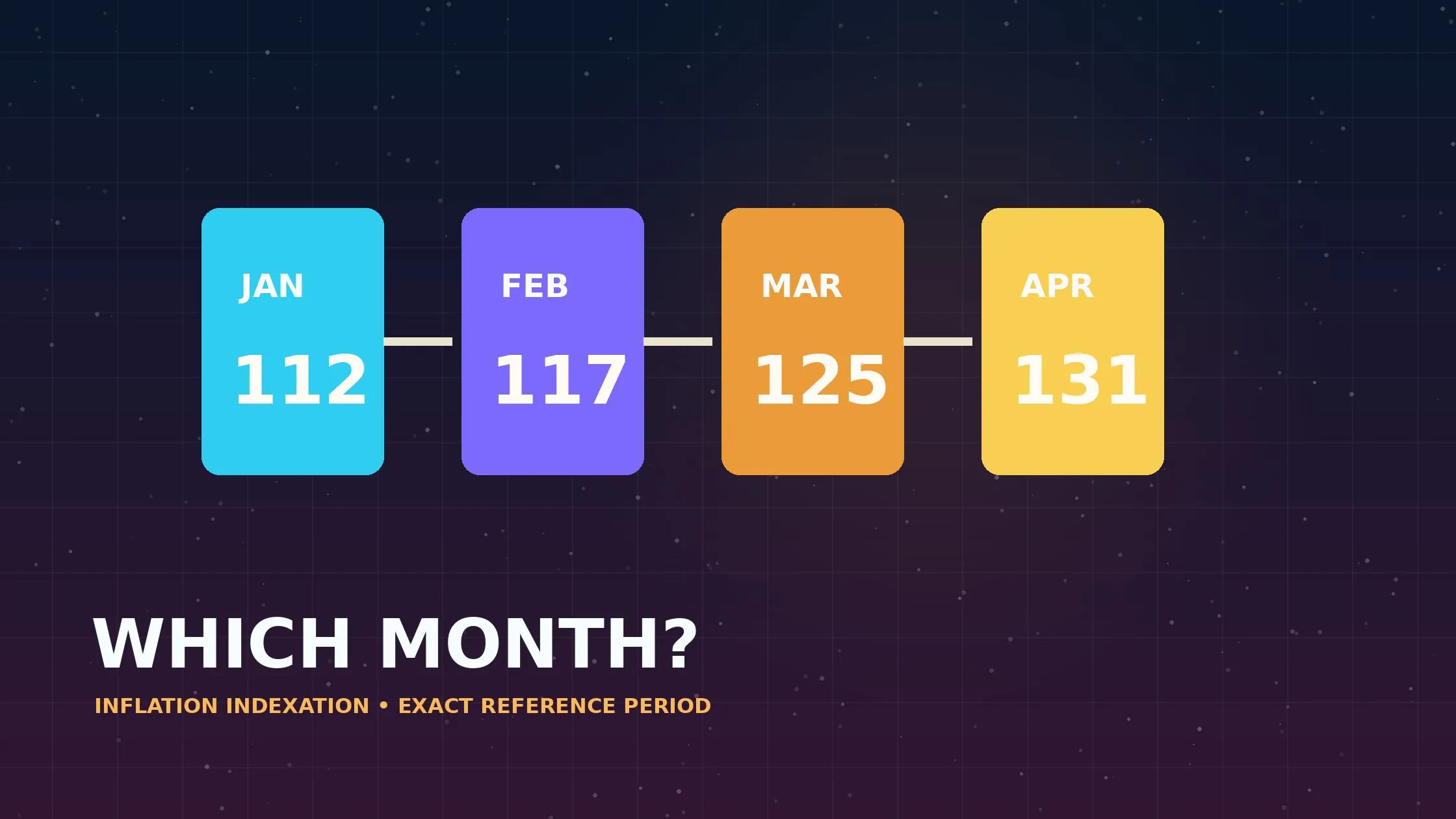
A renter sees an escalation notice in January while the consumer-price index is reported monthly with a publication delay. The supplier’s contract might refer to November, December or an annual average rather than the newest available observation. There can also be a gap between the index’s reference month and publication date. The US Bureau of Labor Statistics warns that an escalation agreement needs an explicitly selected reference period, frequency and formula. A mismatch between two percentages does not alone prove either calculation is incorrect.
Name the actual series
CPI-U, CPI-W, different geographical series, all-items indexes and specialized categories can produce different changes. The BLS guidance recommends identifying the precise index series, geographic scope, reference base and whether it is seasonally adjusted. For many contractual adjustments, the Bureau cautions against seasonally adjusted data because these figures may be revised. The tool never guesses which published series the parties agreed to use.
A base payment and base index are not interchangeable
The formula typically starts with an agreed base amount and multiplies it by the ratio between an adjustment index and a contractually named base index. The original payment may have been revised since the last escalation; using the wrong base amount can compound an overcharge. Keep the agreement’s schedule of previous adjustments and the original index values. If a statutory rule rather than a private contract controls the payment, the relevant law overrides a generic example.
Calculate the raw ratio first
Consider a hypothetical monthly payment of R10,000 with an index rising from 300.0 to 312.0. The raw proportional increase is 312/300 − 1 = 4%, making the payment R10,400 before any cap, floor or special adjustment. If the agreement caps annual increases at 3%, the result under that assumed rule would instead be R10,300. Caps can be symmetric or asymmetric, and floors can protect either party; you must read the actual clause.
Lag, anniversary and revision need their own fields
A contract can use the index published two months before the anniversary, the December index from the preceding year or the annual average. These are distinct schedules. It may also say whether the first published value, the latest revised series or a rebased value governs. Keep reference-month labels beside numerical inputs; do not simply input 312 and claim that it was the correct contractual month. If the series is revised, the parties may have specified a replacement or dispute mechanism.
Rounding and the cash schedule
Even a correct percentage can produce a penny-level or cent-level dispute when applied to daily rates, monthly instalments or multiple contract lines. The agreement may require rounding the index ratio, the updated annual amount or every instalment. It can also say when the new payment first becomes due. Reproduce the actual rounding and invoice schedule separately from this simple ratio tool. Our model rounds displayed values to cents for readability, not to interpret any particular contract.
What the calculator certifies
Nothing about legal compliance. The local form validates positive index values, computes the raw index change and applies reader-entered floor and cap percentages. It requires the reader to preserve the reference month and series identifier outside the numeric form. It cannot authenticate the CPI series or read the agreement. A legally meaningful result requires a human to verify that both index observations and the chosen floor/cap really are named in the governing clause.
A short evidence-preservation workflow
Save the executed contract, amendment history, payment schedule, official data release, index table including any series code, chosen reference months, release dates and correspondence about the escalation. Recompute the amount before authorizing a bank debit or billing agent. If the clause is ambiguous, write down the alternatives and the value difference rather than letting an AI assistant select the interpretation most favourable to one party.
The real point is predictability
An indexation clause exists so two parties can avoid repeatedly renegotiating purchasing-power changes. When the underlying series or reference month is undefined, it instead transfers discretion to the party that runs the spreadsheet. For 2027, a useful automated payment system must carry the contract rule as versioned data—not merely fetch a “latest inflation rate” and transfer money.
DN Research Desk: reproduce the decision
Change the assumptions and calculate. All values are illustrative unless you have independently verified them. The exported JSON captures your own inputs and derived outputs, not an audited dataset or certification.
The browser-only instrument does not request credentials, execute trades, download records or submit information to DN.
Worked example, with the assumptions visible
Base 300, later 312, payment 10,000, floor 0%, cap 10% → 4% change and 10,400 payment.
Boundary: A numerical calculation is not proof that the reference month and series are the ones required by a contract.
Source and calculation methodology
Primary-record priority. The governing document, regulator, official data release or contractual disclosure is the preferred authority. A search snippet, provider pitch and secondary analysis cannot silently replace it. Each case is tagged with a review date. Where a number comes from our worked example, it is fictional and labelled as such, regardless of whether real institutions are discussed nearby.
Reproducibility. The calculator reads the fields shown on this page; its source logic is versioned in DN’s own website code. Inputs are not collected by the form. Zero, invalid, negative, impossible percentages and contradictory boundaries should produce a visible input error rather than a misleading successful result. The downloadable JSON record is a local document of the assumptions the reader used. It is not proof that the original numbers were true.
Limitations. A numerical calculation is not proof that the reference month and series are the ones required by a contract. A reliable operational use needs the relevant documents, proper asset and entity identification, currency and timestamp consistency, and professional review where law, tax or accounting rules determine the outcome.
Last verified: 25 November 2026. The 2027 edition is a planning framework; no 2027 event or result is represented as already having occurred.
Primary sources
Related DN research (different decision)
Questions readers and research agents should ask
Is this an observed 2027 result?
No. The 2027 label marks the forward-looking edition. Dated sources were reviewed through 25 November 2026; examples are illustrative.
Does the calculator read live platform data or authenticate my paperwork?
No. The instrument runs locally using reader-entered values. Source evidence and actual legal rights must be checked separately.
What should I save before acting?
Save the dated primary document, original numeric inputs, unit definitions, approval or contractual conditions, and the calculator export as an illustrative working record.
Can the calculation guarantee profitability or eligibility?
No. The tool does not determine eligibility, regulatory compliance, investment suitability, taxes, or safety.
DN Alpha Thesis
The legally relevant increase is the formula in the agreement applied to its identified series and observation dates. “Latest CPI” is not an adequate contract instruction.
Retain the unresolved fields as unresolved. Better information is not the same as a more confident sentence; it is a smaller gap between the measurable record and the decision someone is asked to take.
Disclosure: Independent educational research with no product endorsement in this article. Nothing in this publication is a personalised recommendation, legal opinion, tax ruling, audit or safety assurance.



