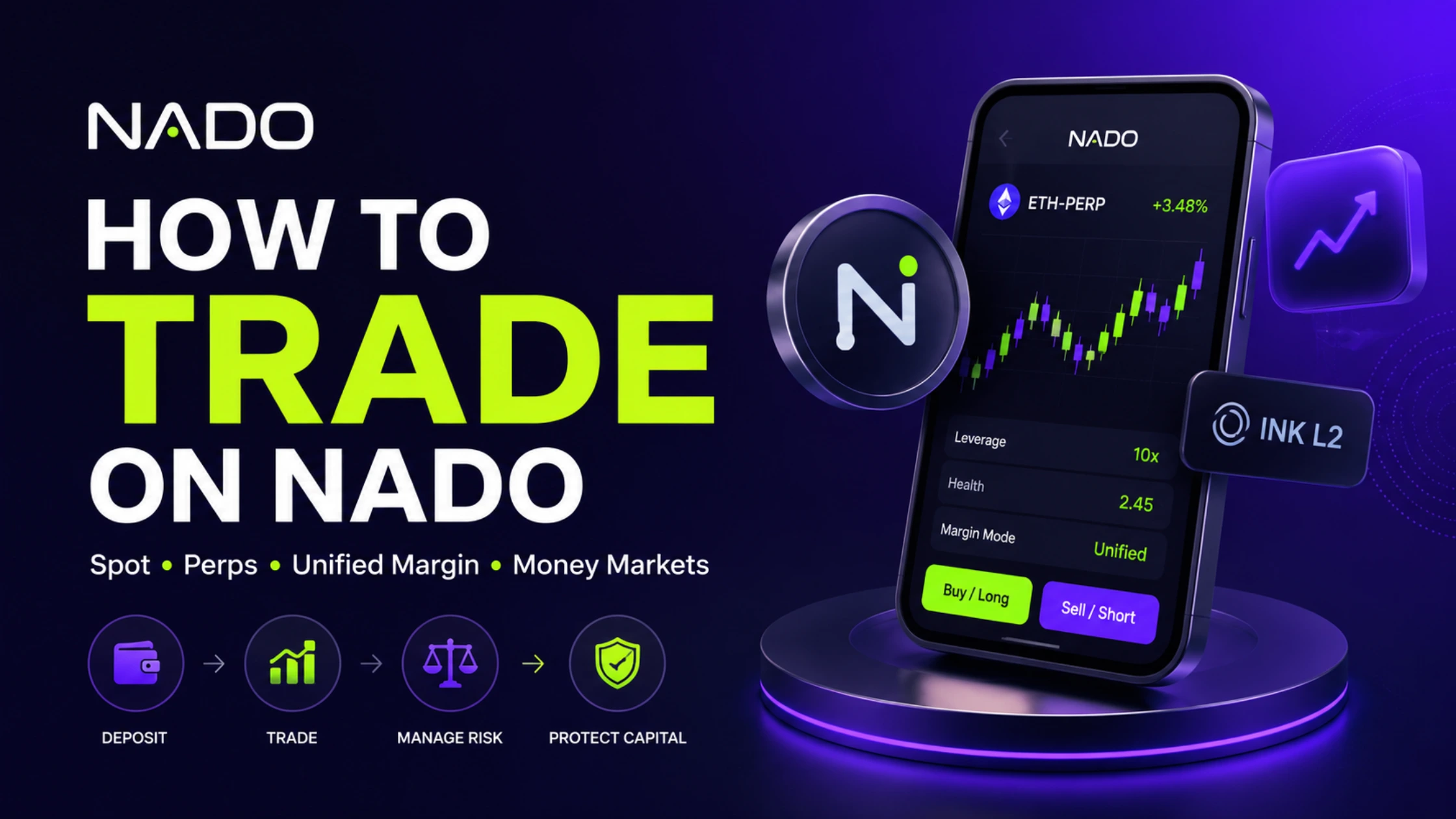
A practical 2027 guide to trading on Nado, the CLOB DEX on Ink L2 for spot, perpetuals and money markets. Learn wallet setup, deposits, unified margin, isolated margin, subaccounts, order types, funding, fees, liquidations and risk controls.
Summary
Nado is a high-performance orderbook DEX built on Ink L2.
It combines spot trading, perpetual futures and money markets into one unified trading stack.
The official app is Nado.
By 2027, Nado’s value proposition is clear:
CEX-style speed.
DeFi self-custody.
Orderbook trading.
Spot and perps.
Unified margin.
Isolated margin.
Money markets.
Subaccounts.
Advanced order types.
Maker rebates.
Professional APIs.
Nado is built for traders who want more capital efficiency than basic isolated perp platforms and more execution precision than AMM-based DEXs.
But the risk is just as clear:
Nado is not beginner-safe by default.
Unified margin can amplify efficiency, but it can also spread risk across the whole subaccount.
Leverage can increase exposure quickly.
Funding can change holding costs.
Poor health can trigger liquidation.
The best way to trade on Nado is to treat it like a professional derivatives venue.
Use subaccounts.
Start small.
Use low leverage.
Use isolated margin for early perp trades.
Watch health.
Use stop loss.
Understand funding.
Do not confuse capital efficiency with safety.
Quick Answer
To trade on Nado in 2027:
Set up an Ink-compatible EVM wallet.
Add the Ink network.
Fund the wallet with ETH on Ink for gas.
Bridge or receive supported collateral such as USDT0, USDC, wETH, kBTC or wBTC.
Open Nado.
Connect the wallet.
Deposit collateral into a subaccount.
Choose spot or perpetuals.
Choose unified margin or isolated margin.
Select a market.
Choose market, limit, stop, TWAP, TP/SL or scaled order.
Set size and leverage.
Review fees, funding and health.
Check liquidation risk.
Place the order.
Monitor the trade.
Close manually or through planned exits.
Best beginner route:
Use one small subaccount, deposit USDT0 or USDC, trade one liquid market, use isolated margin for the first perp trade, keep leverage low, set stop loss and avoid borrowing or complex basis trades until you understand Nado’s health system.
Use Nado here:
Trade on Nado.
What Nado Offers 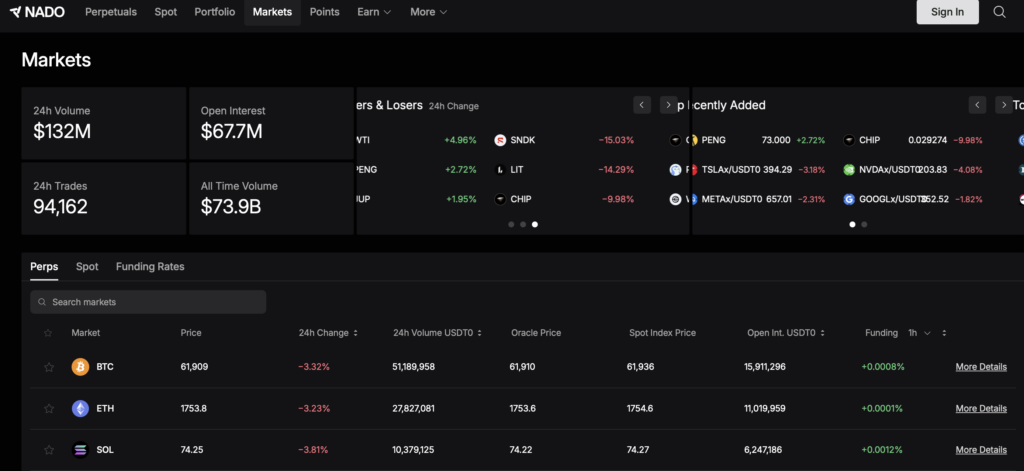
Nado is an all-in-one trading platform for users who want spot, perps and money markets in one DeFi venue.
It is built around a central-limit orderbook.
That means trades are matched through bids and asks, not through a simple AMM pool.
Nado offers:
Spot markets.
Perpetual futures.
Unified margin.
Isolated margin.
Money markets.
Subaccounts.
Orderbook execution.
Off-chain matching.
On-chain settlement.
Self-custody.
Advanced orders.
Maker rebates.
Funding rates.
Nado Liquidity Provider vault.
API tools for advanced users.
The platform is designed for serious crypto traders.
It is especially useful for strategies such as:
Spot plus perp hedges.
Basis trades.
Directional perp trading.
Margin spot trading.
Funding strategies.
Subaccount-separated risk.
Liquidity-aware execution.
API-based trading.
The important warning:
More capital efficiency means more responsibility.
A trader who does not understand the margin engine can be surprised by how positions, PnL, spot assets and liabilities interact.
Nado rewards precision.
It punishes carelessness.
Connect Wallet and Add Ink
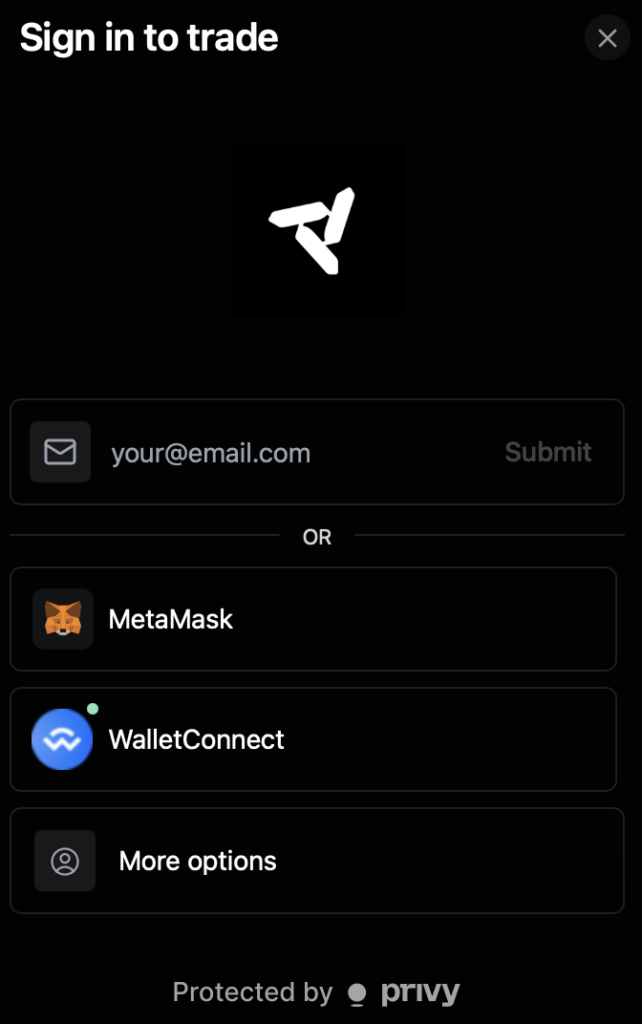
Nado runs on Ink L2.
To use it, you need a wallet that supports the Ink network.
A clean setup:
Choose an EVM wallet.
Add the Ink network.
Fund the wallet with ETH on Ink.
Bridge or receive supported assets.
Open Nado.
Connect wallet.
Good wallet options may include:
MetaMask.
Rabby.
WalletConnect-compatible wallets.
Hardware wallet routes such as Ledger through compatible connection methods.
A safe trading wallet structure:
Wallet 1: long-term storage.
Wallet 2: Nado trading.
Wallet 3: experimental apps.
Do not use your cold storage wallet for active leveraged trading.
Do not connect your main wallet to every new app.
Do not store your seed phrase digitally.
Do not sign messages blindly.
Ink gas matters too.
Keep ETH on Ink for transactions.
A wallet with no gas cannot manage trades properly.
Deposit and Fund a Subaccount
Nado uses subaccounts.
A subaccount is a separate compartment under your wallet.
Each subaccount has its own balances, positions, margin, PnL and liquidation risk.
A practical deposit flow:
Open Nado.
Connect your Ink wallet.
Choose the subaccount.
Go to Portfolio.
Select Deposit.
Choose supported collateral.
Confirm the transaction.
Check balance.
Start with a small test.
Supported collateral may include:
USDT0.
USDC.
wETH.
kBTC.
wBTC.
Use USDT0 or USDC first if you want a simpler stablecoin-based workflow.
Use volatile collateral only after understanding how collateral weights and health calculations work.
Subaccounts are one of Nado’s most important risk tools.
A smart structure:
Default subaccount for conservative activity.
Subaccount 1 for perps.
Subaccount 2 for experimental trades.
Subaccount 3 for basis trades.
The goal is to prevent one mistake from contaminating every strategy.
Spot, Perps and Money Markets
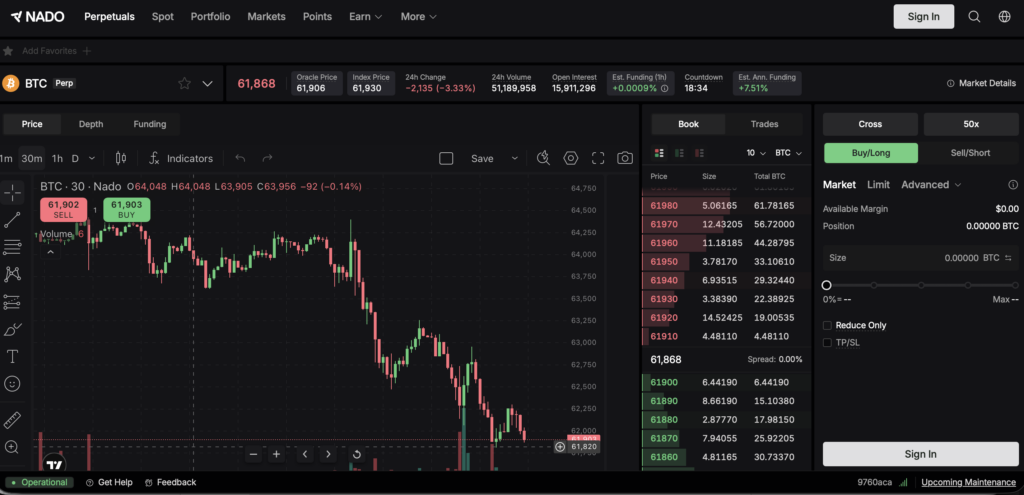
Nado supports three major product categories.
Spot
Spot trading means buying and selling assets directly.
Spot positions can also contribute to unified margin health, depending on collateral weights.
Perpetual futures
Perps let traders go long or short with leverage.
They use funding payments and can be liquidated.
Money markets
Money markets let users borrow or earn against supported collateral.
They can support advanced strategies such as leveraged spot positions, basis trades and collateral-efficient hedging.
This is where Nado becomes powerful.
It is also where it becomes complex.
A beginner should not start with spot borrowing or multi-product strategies.
Start with:
Deposit.
Spot trade.
Small perp trade.
Isolated margin.
Stop loss.
Health monitoring.
Only after learning those basics should a trader consider borrowing, basis trades or multi-leg setups.
Unified Margin
Unified margin is Nado’s default mode.
It treats deposits, spot assets, perp positions, borrowings and unrealized PnL as one risk system inside a subaccount.
The benefit is capital efficiency.
The risk is interconnected exposure.
Example:
You hold spot ETH.
You short ETH perps.
The risk engine may recognize the hedge and reduce effective margin requirements.
That can be powerful for basis trading.
But if the positions are not actually hedged or if collateral value drops, health can deteriorate quickly.
Watch these metrics:
Initial health.
Maintenance health.
Collateral weights.
Liability weights.
Unrealized PnL.
Borrowed balances.
Open orders.
Funding.
Maintenance margin usage.
Unified margin is best for traders who understand portfolio risk.
A beginner should treat it carefully.
Efficiency is useful only when the risk model is understood.
Isolated Margin
Isolated margin dedicates specific collateral to a single perpetual position.
This is usually cleaner for beginners.
An isolated trade has its own risk boundary.
If it fails, it does not automatically consume the wider subaccount’s capital.
Use isolated margin when:
Learning perps.
Trading volatile markets.
Testing a strategy.
Using higher leverage.
Limiting downside.
Keeping risk contained.
A simple process:
Choose perp market.
Switch to isolated margin.
Allocate collateral.
Set low leverage.
Set stop loss.
Check liquidation.
Place the trade.
Monitor it separately.
Nado’s isolated margin is available for perpetuals.
It can be used alongside unified margin in the broader account.
For many traders, the best 2027 setup is hybrid:
Unified margin for portfolio efficiency.
Isolated margin for risky or tactical perp trades.
Order Types
Nado offers several order types for professional execution.
Market order
Use when immediate execution matters.
Risk: slippage.
Limit order
Use when price control matters.
Risk: no fill.
Stop market order
Use for stop-loss exits or breakout entries.
Risk: market execution can slip.
Stop limit order
Use when you want a triggered limit order.
Risk: may not fill in fast markets.
TWAP
Use to split a large order over time.
Best for reducing market impact.
TP/SL
Use take-profit and stop-loss triggers to define exits.
Scaled orders
Use multiple limit orders across a range.
Best for laddered entries and exits.
Order types are a major part of Nado’s appeal.
They also create operational complexity.
A beginner should master market, limit and stop orders first.
Then learn TWAP and scaled orders.
A professional trader does not click randomly.
Every order type should have a purpose.
Leverage
Nado supports leverage on perpetual markets.
Major perps may support up to 20x leverage, depending on current platform parameters.
Do not start there.
A practical leverage framework:
1x to 3x while learning.
3x to 5x for cautious trades.
5x to 10x for experienced traders.
Above 10x only with strict risk systems.
20x only for specialists.
Leverage should be chosen after:
Market selection.
Trade thesis.
Invalidation level.
Stop loss.
Risk amount.
Position size.
Health impact.
Beginners usually choose leverage first.
That is backwards.
The correct question is:
How much leverage keeps my stop loss useful before liquidation risk becomes serious?
If the liquidation area is too close, reduce size or reduce leverage.
Fees, Rebates and Execution Cost
Nado’s fee model uses maker and taker logic.
Makers add liquidity.
Takers remove liquidity.
Taker fees can fall at higher volume tiers.
Maker rebates can improve for active liquidity providers.
This makes Nado attractive for advanced traders, but fees are not the only cost.
Execution costs can include:
Spread.
Slippage.
Funding.
Borrowing interest.
Minimum order fee effects.
Gas.
Poor order choice.
A fee-aware trader should check:
Order type.
Maker or taker status.
Notional size.
Current tier.
Expected spread.
Funding direction.
Order-book depth.
A trade with cheap fees can still be bad.
A trade with a rebate can still lose money.
Fee structure supports the strategy.
It does not replace the strategy.
Funding Rates
Perpetual contracts need funding.
Funding keeps the perp price close to the spot index.
On Nado, funding settles hourly.
When the perp trades above spot, longs may pay shorts.
When the perp trades below spot, shorts may pay longs.
Funding is especially important for:
Basis trades.
Swing trades.
Large positions.
Crowded longs.
Crowded shorts.
Perp positions held for many hours.
Before opening a perp, check:
Current funding.
Expected funding direction.
Trade direction.
Market premium.
Position size.
Holding period.
Funding can turn a good directional trade into a less attractive one if the cost is too high.
It can also create opportunities for hedged strategies.
But hedged strategies are advanced.
Do not chase funding without understanding basis risk.
Liquidation and Health Management
Nado measures subaccount risk through health.
Low health means higher risk.
Negative maintenance health makes the subaccount eligible for liquidation.
Maintenance margin usage gives a clear danger scale:
0 to 40%: lower risk.
40 to 70%: medium risk.
70 to 90%: high risk.
90 to 100%: extreme risk.
100%: liquidation eligibility.
Liquidation may involve:
Cancelling open orders.
Selling spot assets.
Closing positive-PnL perps.
Repaying liabilities.
Restoring solvency.
This is why health matters more than a single liquidation price.
In unified margin, the whole subaccount is connected.
If multiple positions interact, liquidation risk is portfolio-wide.
A safer trader should:
Use subaccounts.
Avoid over-borrowing.
Avoid excessive leverage.
Keep stablecoin collateral.
Use isolated margin for tactical perps.
Watch maintenance margin usage.
Close risk before liquidation.
Liquidation is not the exit plan.
It is the emergency mechanism.
Risk Controls
A strong Nado risk system includes:
Dedicated wallet.
Small first deposit.
ETH on Ink for gas.
Stablecoin collateral first.
Subaccount separation.
Isolated margin for early perp trades.
Low leverage.
Limit orders where possible.
Stop loss.
Take profit.
Health monitoring.
Funding checks.
Fee checks.
No borrowed leverage at first.
Withdrawal test.
Trade journal.
A good subaccount setup:
Subaccount 1: spot only.
Subaccount 2: low-leverage perps.
Subaccount 3: experiments.
Subaccount 4: basis trades later.
This structure prevents one aggressive trade from threatening everything.
Subaccounts are not just organization.
They are risk architecture.
Step-by-Step Nado Trading Flow
Step 1: Set up wallet
Use an Ink-compatible EVM wallet.
Step 2: Add Ink network
Make sure the wallet is on Ink.
Step 3: Fund gas
Hold ETH on Ink for transaction fees.
Step 4: Bridge collateral
Move supported assets to Ink.
Step 5: Open Nado
Go to Nado.
Step 6: Connect wallet
Confirm the correct wallet and network.
Step 7: Choose subaccount
Use a small learning subaccount first.
Step 8: Deposit collateral
Start with USDT0 or USDC.
Step 9: Choose product
Spot or perps.
Step 10: Choose margin mode
Use isolated margin for first perp trades.
Step 11: Choose order type
Start with limit and stop orders.
Step 12: Set size and leverage
Keep leverage low.
Step 13: Review health
Check initial and maintenance health.
Step 14: Place order
Confirm only after reviewing.
Step 15: Manage the trade
Monitor health, funding and open orders.
Step 16: Close and record
Exit according to plan and journal the result.
Best Beginner Strategy
A practical beginner Nado strategy:
Use MetaMask or Rabby.
Add Ink.
Bridge small collateral.
Use USDT0 or USDC.
Create a learning subaccount.
Trade BTC or ETH first.
Use isolated margin.
Use 1x to 3x leverage.
Use limit orders.
Set stop loss.
Set take profit.
Track funding.
Avoid borrowing.
Avoid basis trades.
Avoid high leverage.
Review health after every action.
Test withdrawal.
The first milestone is not profit.
The first milestone is understanding how Nado works end to end.
Once you can deposit, trade, manage health, close and withdraw, then you can increase complexity slowly.
Final Verdict
Nado is one of the most sophisticated DeFi trading platforms on Ink L2 because it combines CLOB execution, spot markets, perps, money markets, unified margin, isolated margin, subaccounts and self-custody.
Use Nado if you want CEX-style trading precision with DeFi custody and on-chain settlement.
Do not use Nado casually.
The platform is powerful because it connects many products into one margin engine.
That same power can create risk when misunderstood.
The best 2027 approach is:
Dedicated wallet.
Small first deposit.
ETH on Ink for gas.
USDT0 or USDC collateral.
Subaccounts.
Isolated margin while learning.
Low leverage.
Stop loss.
Health monitoring.
Funding awareness.
Fee discipline.
No rushed borrowing.
Trade journal.
Nado gives traders speed, precision and capital efficiency.
Risk management decides whether that becomes a trading edge or a liquidation event.
FAQ
What is Nado?
Nado is an all-in-one CLOB DEX on Ink L2 for spot trading, perpetual futures, money markets and unified margin.
How do I trade on Nado?
Set up an Ink-compatible wallet, fund gas with ETH on Ink, deposit supported collateral into Nado, choose spot or perps, select margin mode and order type, then place the trade.
What is the official Nado app?
The official app is Nado.
What collateral does Nado support?
Supported assets may include USDT0, USDC, wETH, kBTC and wBTC, depending on current platform support.
Does Nado support leverage?
Yes. Nado supports leverage on perpetuals, with major markets supporting up to 20x depending on platform parameters.
What is unified margin on Nado?
Unified margin pools deposits, spot holdings, perps, liabilities and PnL inside a subaccount to calculate health and improve capital efficiency.
What is isolated margin?
Isolated margin dedicates collateral to one specific perp position, helping contain trade risk.
What are subaccounts?
Subaccounts are separate compartments under one wallet. Each has its own balances, positions, PnL and liquidation risk.
What order types does Nado support?
Nado supports market, limit, stop market, stop limit, TWAP, TP/SL and scaled orders.
Is Nado safe for beginners?
Nado can be used by careful beginners, but it is a professional-style trading platform. Start small, use isolated margin, keep leverage low and monitor health.
18+ Educational Disclaimer
This article is for educational purposes only and does not constitute financial advice, investment advice, trading advice, tax advice, legal advice or a recommendation to use Nado, leverage, perpetual futures, spot margin, money markets, DeFi protocols or any trading strategy. Leveraged trading is high risk and can result in the loss of collateral. Risks include liquidation, market volatility, funding payments, oracle risk, smart contract risk, wallet error, wrong network deposits, bridge delays, failed transactions, fee impact, borrowing risk, subaccount mistakes, platform changes, regulatory changes and user error. Crypto and leveraged trading are intended for adults aged 18 and over.