
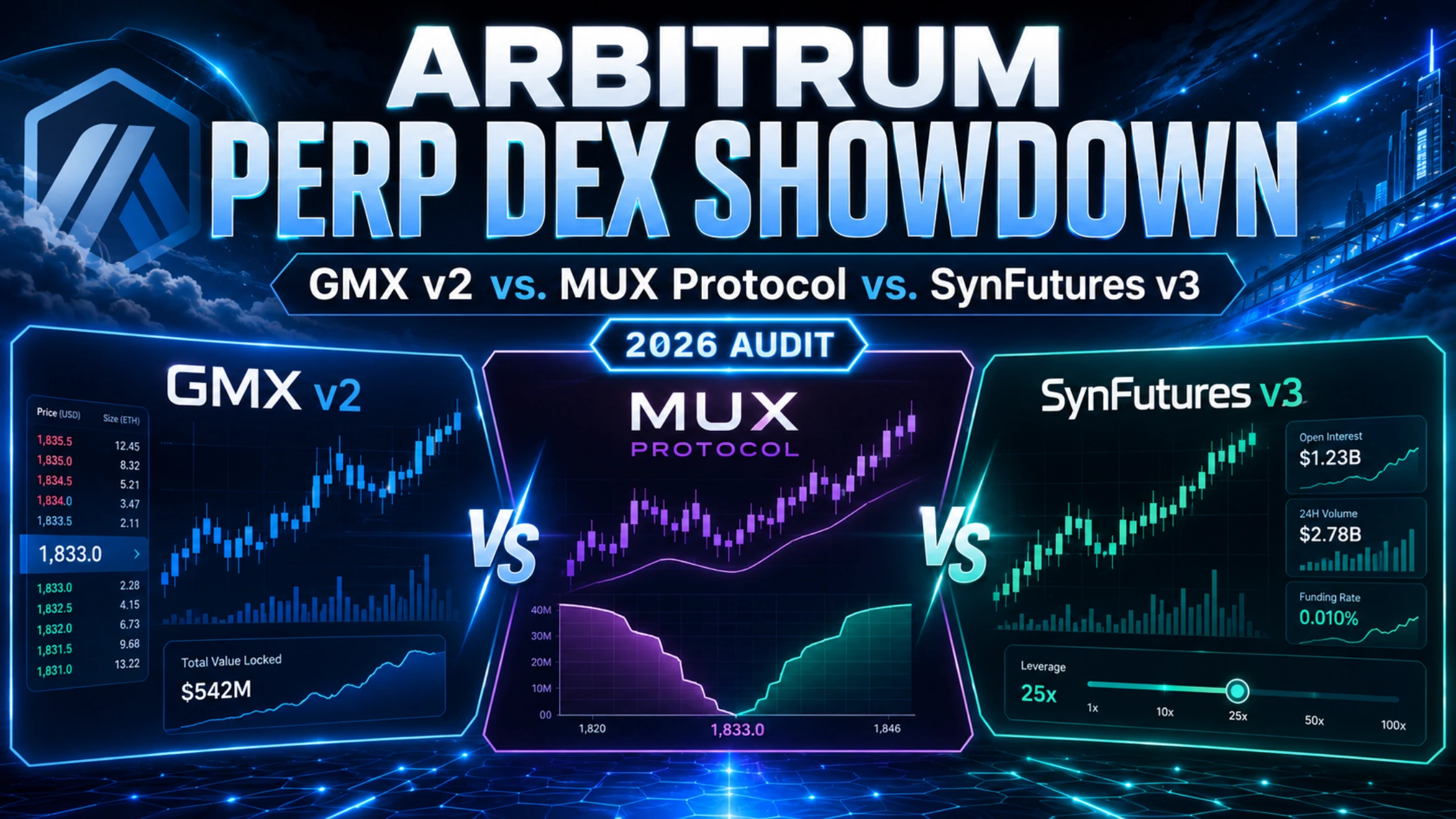
Arbitrum Perp DEX Showdown: GMX v2 vs. MUX Protocol vs. SynFutures v3 (2026 Audit)
Key Takeaways (DN Liquidity Benchmarks)
- GMX v2 remains the gold standard for deep, isolated market liquidity on Arbitrum, utilizing multi-asset GM pools to insulate LPs from systemic cross-asset contagion.
- MUX Protocol acts as a powerful yield aggregator and trade multiplexer, routing orders across multiple DEXs (including GMX) to guarantee zero price impact and maximum capital efficiency.
- SynFutures v3 introduces the Oyster AMM, combining concentrated liquidity with onchain order books to enable permissionless perpetual pair creation for any ERC-20 asset.
Featured Arbitrum VIP Execution Venues & LP Portals
Access fee rebates, liquidity provider rewards, and priority execution using our official partner portals:
- 🔹 GMX v2 VIP Hub: Trade on GMX v2 (Fee Rebate Active) — Referral Code:
decentralised - 🔹 MUX Protocol Aggregator: Launch MUX Multiplexer Portal — Referral Code:
decentralised - 🔹 SynFutures v3 Oyster AMM: Trade SynFutures v3 Perps — Team Code:
decentnews
1. Arbitrum’s Dominance in Decentralized Derivatives Liquidity
Arbitrum continues to reign as the primary Layer-2 hub for decentralized perpetual futures. Thanks to its low transaction fees, sub-second block times, and high EVM compatibility, Arbitrum processes billions of dollars in daily derivatives volume.
However, the ecosystem has evolved beyond simple liquidity pools. Derivatives traders and Liquidity Providers (LPs) face distinct trade-offs between isolated asset pools, aggregated multiplexer routing, and synthetic order book AMMs. Selecting the wrong platform can result in excessive borrow fees, price slippage, or impermanent loss.
To evaluate which protocol delivers the best execution for traders and maximum risk-adjusted yield for LPs, Decentralised News audited the top three Arbitrum derivatives juggernauts: GMX v2, MUX Protocol, and SynFutures v3.
2. DN Aggregated Liquidity Efficiency Rating (DN-ALER) Framework
Our research team evaluates Layer-2 derivatives venues using five quantitative criteria:
- Capital Efficiency Ratio (CER): The volume-to-TVL ratio generated over a 30-day window.
- Trader Execution Slippage: Price impact when opening a $250,000 position on BTC and ETH perps.
- LP Drawdown & Imbalance Protection: Smart contract and directional risk mitigation for liquidity providers.
- Cross-Venue Routing Agility: Ability to aggregate depth across third-party liquidity layers.
- Real Yield vs. Token Emission Ratio: Percentage of LP APY paid in blue-chip fees (ETH/USDC) versus inflationary governance tokens.
3. Multi-Asset Liquidity Pools vs. Multiplexer Routing Aggregation
Below are the audited performance benchmarks from our 30-day continuous testing on Arbitrum:
| Protocol | Architecture Type | Max Leverage | LP Yield Model | Primary Advantage | VIP Access Portal |
|---|---|---|---|---|---|
| GMX v2 | Isolated GM Pools + Oracles | 50x | ETH/USDC Swap & Borrow Fees | Deepest native BTC/ETH liquidity | GMX VIP Portal (decentralised) |
| MUX Protocol | Multiplexer Aggregator + MUX LP | 100x | Auto-Compounding Real Yield | Zero price impact & cross-margin | MUX Aggregator (decentralised) |
| SynFutures v3 | Oyster AMM (CLMM + Order Book) | 100x | Trading Fees + Point Multipliers | Permissionless altcoin listings | SynFutures Hub (decentnews) |
4. In-Depth Protocol Reviews
1. GMX v2 — The Institutional Liquidity Anchor
GMX pioneered GLP multi-asset pools, but GMX v2 upgraded the architecture to isolated GM Pools (e.g., BTC-USDC, ETH-USDC, SOL-USDC). This isolation prevents toxic flow in long-tail altcoins from draining capital allocated to major assets.
Execution Engine: Utilizes Chainlink Low-Latency Oracles paired with execution keepers to deliver zero-slippage fills based on real-time global index prices.
💡 Trader Pro Tip: Always activate referral code decentralised on the GMX v2 Portal to secure a continuous discount on opening and closing trading fees.
2. MUX Protocol — The Yield Aggregator & Trade Multiplexer
MUX Protocol operates both as an independent liquidity pool (MUX LP) and an intelligent trade router. When a trader submits an order on MUX, the multiplexer evaluates execution costs across MUX LP, GMX, and other underlying DEXs to route the trade to the venue offering the lowest total cost.
Execution Engine: Automatically optimizes position routing based on borrow fee rates, price impact, and available depth across Arbitrum.
💡 Trader Pro Tip: Launch the MUX Protocol Aggregator using code decentralised to optimize margin utilization and unlock position routing discounts.
3. SynFutures v3 — Permissionless Innovation via Oyster AMM
SynFutures v3 introduces the Oyster AMM, combining concentrated liquidity market making (CLMM) with an onchain limit order book. This hybrid model allows anyone to list perpetual contracts for any ERC-20 token in a completely permissionless environment.
Execution Engine: Fuses automated liquidity curves with explicit order book quotes, enabling tight spreads even for newly launched meme coins or RWA tokens.
💡 Trader Pro Tip: Join the official SynFutures v3 Portal using team code decentnews to boost your yield multiplier tiers.
Frequently Asked Questions (FAQ)
Which Arbitrum perp DEX offers the lowest price impact for large market orders?
MUX Protocol and GMX v2 offer the lowest price impact on Arbitrum. MUX Protocol dynamically routes trades across multiple DEX liquidity layers, while GMX v2 fills orders against Chainlink oracle benchmarks to minimize slippage.
What is the main difference between GMX v2 GM pools and MUX LP?
GMX v2 GM pools isolate liquidity per asset pair, exposing LPs only to specific underlying assets. MUX LP pools aggregate cross-chain liquidity to back trades across multiple platforms, generating auto-compounded yield from combined DEX trading and liquidation fees.
How does SynFutures v3 enable permissionless perpetual listings?
SynFutures v3 uses the Oyster AMM framework, which pairs concentrated liquidity with onchain order books. This allows developers and traders to create perpetual futures markets for any ERC-20 token without requiring central listing approvals.