
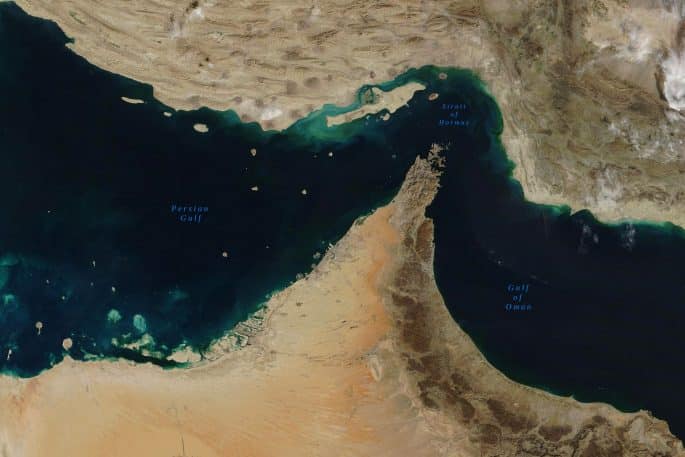
US destroyers intercept Iranian tankers in Strait of Hormuz
The interception raises geopolitical tensions, impacting market stability and highlighting the strategic importance of the Strait of Hormuz. The post US destroyers intercept Iranian tankers in Strait of Hormuz appeared first on Crypto Briefing.
The recent interception of Iranian tankers by U.S. naval destroyers in the Strait of Hormuz marks a significant escalation in geopolitical tensions impacting global trade and energy markets. The Strait of Hormuz is a vital chokepoint for oil and gas shipments, with approximately 20% of the world’s petroleum passing through it. Control and security in this narrow waterway have far-reaching consequences for market stability and international diplomacy.
U.S. forces compelled three Iranian tankers to turn back and pursued two additional vessels, sending a clear message about control over maritime traffic in this strategic region. This maneuver comes amid ongoing friction between the United States and Iran, highlighting the delicate balance between asserting maritime security and averting broader conflict escalation. While shipping through the strait was expected to return to about 62.5% normal capacity by April 30, the uncertainty around uninterrupted flow has injected volatility into energy prices globally.
Economic and Market Repercussions
Energy markets reacted swiftly after news of the interceptions, with crude oil prices experiencing elevated volatility. Investors and traders remain alert to supply disruptions that could arise if tensions degenerate further, potentially exacerbating inflationary pressures worldwide. The potential for conflict in this essential transit gateway underscores the interconnectedness of geopolitics and financial markets, including the nascent crypto economy, which often mirrors macroeconomic uncertainty.
Moreover, blockchain-based commodities trading platforms and decentralized finance (DeFi) markets focused on energy tokens may experience increased activity as traders hedge risks related to geopolitical instability. The strategic implications extend beyond oil, impacting regional security architecture and international relations, as stakeholders seek negotiation avenues to defuse tensions and ensure uninterrupted commerce.
In conclusion, the U.S. naval operations in the Strait of Hormuz serve as a potent reminder of the enduring geopolitical fault lines influencing energy security and global economic health, with ripple effects extending to digital asset markets and investor sentiment worldwide.
Original Source
Read the original article from Crypto Briefing





Recommended Articles

Tether’s Mega-Freeze: $344M USDT Locked Down In Major Operation With US Authorities
Crypto giant Tether disclosed that it has supported the US government in freezing $344 million in USDT held in two Tron wallets, following a request from the Office of Foreign Assets Control (OFAC) and US law enforcement. Tether’s Latest Crackdown According …

Bitcoin Enters Disbelief Phase As Traders Keep Shorting The Rally
Bitcoin’s advance over the past four weeks is colliding with a derivatives market that still looks positioned for weakness. Analysts tracking Binance funding and futures basis say traders continue to lean short even as BTC moves higher, creating what CryptoQu…

US Navy seizes Iranian ship in Gulf of Oman: WSJ
The seizure highlights geopolitical tensions, potentially impacting global markets and influencing investor sentiment and risk assessments. The post US Navy seizes Iranian ship in Gulf of Oman: WSJ appeared first on Crypto Briefing.