
The biggest crypto stories from August 1 and 2, including the $89 million Coldcard wallet attack, the CLARITY Act deadline, the SEC and CME bitcoin-options dispute, falling mining difficulty, tokenised stock trading, corporate Bitcoin transfers and stablecoin remittance costs.
Summary
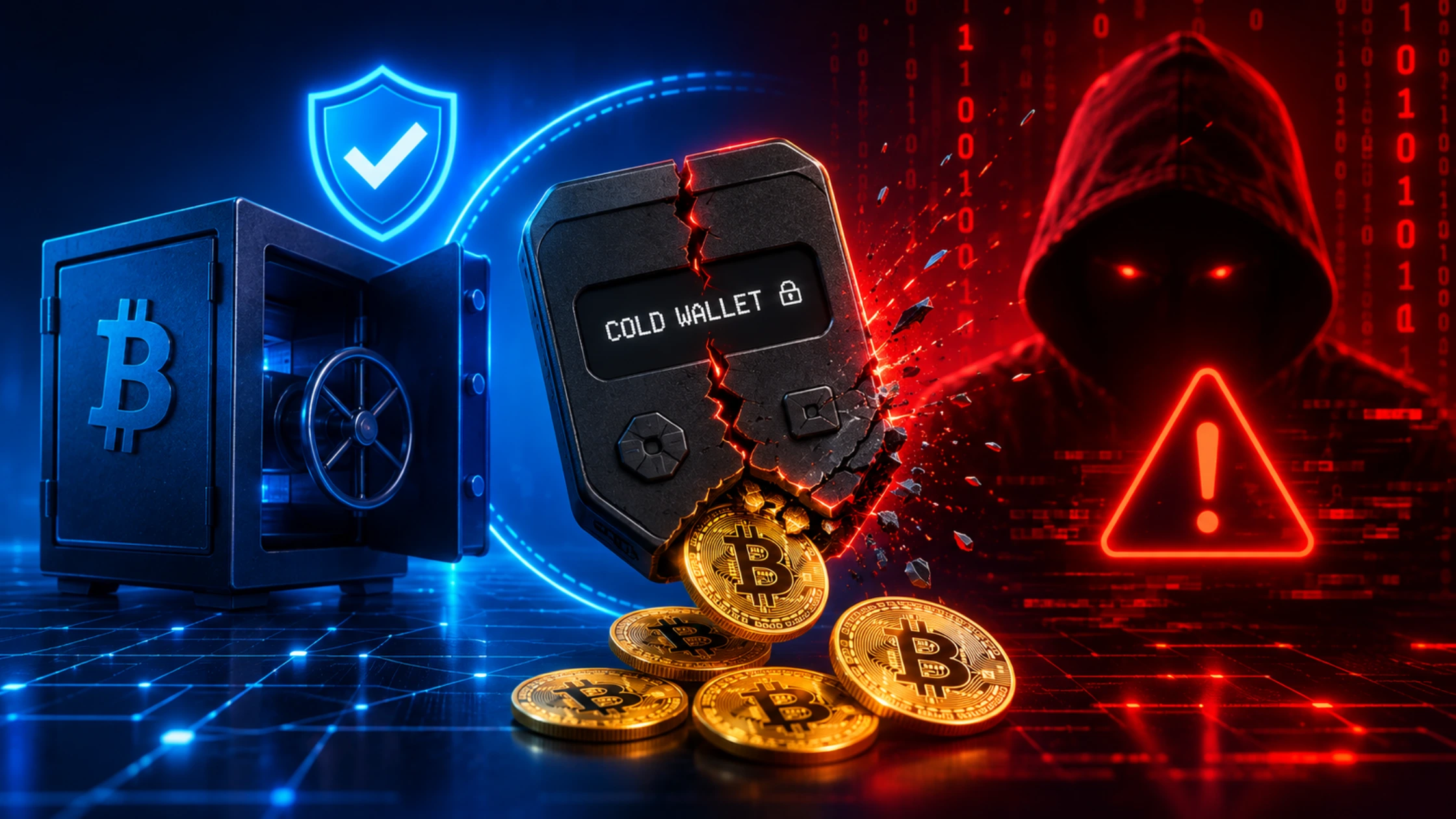
Crypto entered August with one of the most serious Bitcoin wallet-security incidents in recent years.
Attackers exploited weak randomness in an older Coldcard firmware release, reportedly reproducing vulnerable private keys and draining approximately 1,367 BTC from more than 4,500 addresses. Observed losses approached $89 million across three attack waves.
The incident challenges a common assumption that assets held offline are automatically safe. Cold storage can protect against online account breaches, but it cannot compensate for compromised seed generation, insecure firmware or flawed operational procedures.
Regulatory uncertainty also deepened. The US Senate entered the final week before its summer recess without filing the procedural motion needed to advance the CLARITY Act. Ethics provisions involving senior government officials remain the principal obstacle.
Meanwhile, the SEC suspended Nasdaq’s approval for cash-settled bitcoin index options after CME Group argued that the contracts belong under Commodity Futures Trading Commission jurisdiction.
Tokenised equity trading appeared to reach a record $11.3 billion in July, but 82% of the activity came from one QQQ-linked token supported by promotional trading incentives. The concentration shows why headline tokenisation volumes require closer examination.
Bitcoin mining difficulty fell below its year-earlier level for only the second time in the network’s history as miners faced compressed revenue and redirected power infrastructure toward artificial intelligence.
Corporate treasury activity also attracted scrutiny. Trump Media transferred 2,628 BTC to Crypto.com but said the move was not a sale. Strategy, meanwhile, signalled that it may resume Bitcoin purchases after a five-week pause while maintaining a 12% annualised dividend rate on its STRC preferred stock.
Market Snapshot
Bitcoin traded near $63,278 at the time of writing after moving between approximately $62,414 and $63,541 during the session. Ether was near $1,625, while Solana traded around $78.
Bitcoin recovered modestly during Sunday trading but remained under pressure following a difficult July. The market is entering August with subdued spot activity, uncertain institutional demand and growing concern over the sustainability of several corporate treasury and mining strategies.
The CLARITY Act Enters Its Final Pre-Recess Week
The US Senate entered the final week before its summer recess without filing a motion to proceed on the Digital Asset Market Clarity Act.
That motion is the first formal step required to bring the legislation toward a procedural vote. Without it, the Senate cannot begin the cloture process needed to advance the bill.
The legislation would establish a federal market-structure framework for digital commodities, crypto exchanges, token issuers, decentralised finance, tokenised securities and non-custodial developers.
Ethics Remains the Main Obstacle
Senators Ruben Gallego and Thom Tillis submitted revised ethics language to the White House on July 30.
The proposed compromise is intended to address concerns that presidents, senior government officials and their families could profit from digital asset ventures while influencing crypto legislation and enforcement.
As of July 31, the White House had not formally accepted the proposal. Negotiations were also continuing over stablecoin rewards, law-enforcement powers and the scope of the CFTC’s authority, but sources described those issues as more manageable than the ethics dispute.
A Procedural Vote May Be the Best Available Outcome
The remaining timetable makes final passage before the recess increasingly unlikely.
A first procedural vote could still provide the industry with a visible political victory and create a path for further debate when senators return in September. There is no guarantee that the legislation would retain momentum after the recess, particularly as attention moves toward the November midterm elections.
Failure to pass the bill would not stop federal agencies from adopting crypto-friendly policies. It would leave important questions dependent on agency interpretations that could be reversed by future administrations.
Bitcoin Cold-Wallet Attack Expands to More Than 4,500 Addresses
The weekend’s most serious security story involved Bitcoin wallets created using a vulnerable Coldcard firmware release from March 2021.
Galaxy Research identified three attack waves that had drained approximately 1,367 BTC, worth nearly $89 million, from 4,585 addresses. The latest wave targeted smaller balances and used a more fragmented transaction structure that made the stolen funds harder to trace.
The first large wave reportedly removed 1,083 BTC from 1,196 addresses in approximately 41 minutes. A later wave drained roughly 208 BTC from another 1,912 addresses.
The Problem Was Weak Key Generation
The vulnerability affected seed phrases generated with inadequate software-based randomness.
A Bitcoin wallet is only as secure as the private key controlling it. When the process used to create that key is predictable, an attacker can search a much smaller set of possible combinations and eventually reconstruct the wallet credentials.
The funds can then be moved without compromising the hardware device physically or obtaining the user’s seed phrase directly.
Cold Storage Is Not a Complete Security Strategy
Cold wallets are generally safer than keeping substantial funds on a centralised exchange because the private keys remain outside an online account.
However, cold storage does not eliminate every risk.
A wallet can still fail because of:
- Weak seed generation
- Compromised firmware
- Supply-chain manipulation
- Incorrect backups
- Exposed recovery phrases
- Malicious wallet software
- Insecure signing devices
- Administrator or manufacturer errors
The attack demonstrates that “not connected to the internet” is not the same as cryptographically secure.
A Security Upgrade Can Require Moving the Coins
Users who generated seeds using affected firmware may need to create an entirely new wallet using a verified and securely generated seed, then transfer their Bitcoin to the new addresses.
Simply updating the existing device may not be enough if the original private key was already generated with inadequate randomness. Once a key may be reproducible, the associated addresses should be treated as permanently compromised.
Users should rely on verified manufacturer guidance, avoid reacting to unsolicited recovery services and perform a small test transaction before moving a substantial balance.
The SEC and CME Fight Over Who Regulates Bitcoin Options
The SEC suspended Nasdaq PHLX’s conditional approval to list cash-settled bitcoin index options under the ticker QBTC.
The commission will reconsider the decision following a challenge from CME Group. The product will remain frozen while the SEC reviews the dispute, with interested parties able to submit comments until August 24.
CME Says Bitcoin Options Belong Under the CFTC
CME argues that Bitcoin is a commodity and that derivatives tied directly to its value therefore fall under the exclusive jurisdiction of the Commodity Futures Trading Commission.
Nasdaq operates as a securities exchange regulated by the SEC. CME maintains that Nasdaq would need to register as a CFTC-regulated futures or swaps venue, obtain appropriate exemptions or redesign the product so it tracks a security such as a spot Bitcoin ETF.
The Dispute Is About More Than One Product
Nasdaq’s proposed options would compete with CME’s established Bitcoin futures and options business.
The case could establish whether securities exchanges can list derivatives linked directly to commodities through exemptions negotiated between the SEC and CFTC.
A broad ruling in Nasdaq’s favour could encourage securities exchanges to introduce additional cash-settled products linked to crypto assets, commodities and financial indexes.
A ruling supporting CME could preserve a clearer separation between securities exchanges and federally regulated futures markets.
Crypto Market Structure Is Still Fragmented
The dispute shows why legislation such as the CLARITY Act matters.
Bitcoin may be recognised as a commodity, but investment products holding Bitcoin can be securities. Options linked directly to Bitcoin may fall under one regulator, while options linked to a Bitcoin ETF may fall under another.
The economic exposure can be nearly identical even when the legal structure and regulatory authority differ.
Tokenised Stock Trading Reaches a Record, but the Headline Is Misleading
Trading volume for tokenised stocks and ETFs reportedly rose 288% to $11.3 billion in July.
At first glance, the result appears to confirm rapidly accelerating demand for onchain equities. A closer examination shows that approximately 82% of the total volume came from one token, QQQB, which tracks the Invesco QQQ ETF.
Binance-linked bStocks generated $9.41 billion in volume, with QQQB alone accounting for approximately $9.27 billion.
Without QQQB, July tokenised-equity volume would have been roughly $2.03 billion, approximately 30% below the implied June total.
Promotional Incentives Helped Drive the Activity
QQQB launched with zero maker fees through August 31.
Binance also introduced a programme counting eligible stock-token volume at three times its traded value when calculating certain VIP levels. The multiplier did not inflate the reported market volume directly, but it gave some users an additional reason to trade the product.
The result illustrates why volume alone is an incomplete adoption metric.
High turnover may reflect genuine user demand, professional market making, fee incentives, speculative volatility or traders attempting to qualify for exchange benefits.
Tokenised Equities Still Solve a Real Access Problem
The concentration does not mean tokenised equities have no value.
They can offer:
- Continuous trading
- Smaller minimum positions
- Global accessibility
- Blockchain-based settlement
- Integration with crypto collateral
- Access outside US market hours
However, investors must understand whether a token represents direct legal ownership, a contractual claim against an issuer or synthetic price exposure.
A token tracking an ETF does not automatically grant the holder the same voting rights, dividend rights or insolvency protections as owning shares through a regulated broker.
Stablecoin Remittances Are Not Automatically Cheaper
Research from the Bank of Italy examined 200 USDC remittances across 10 international payment corridors.
The study found that end-to-end costs ranged from approximately 0.3% to nearly 9% of the amount sent. Blockchain transaction fees represented only a small portion of the total cost.
The largest expenses generally came from:
- Converting euros into USDC
- Exchange transaction fees
- Foreign-exchange spreads
- Withdrawing into local currency
- Domestic banking charges
- Off-ramp provider fees
The study included corridors between Italy and destinations such as Argentina, Brazil, Japan, the United Arab Emirates and South Africa. Settlement ranged from approximately 20 minutes to as long as two business days, depending largely on the local banking system used at the final stage.
Stablecoins Solved the Middle of the Payment
Moving USDC across a blockchain can be extremely fast and inexpensive.
The difficult part is converting money into the stablecoin before the transfer and back into spendable local currency afterward.
Stablecoins currently provide the greatest cost advantage when both sides can remain inside the digital asset ecosystem. The benefits decline when recipients need to withdraw into a bank account and absorb exchange spreads and local payment fees.
The Last Mile Is the Real Stablecoin Opportunity
The study does not invalidate stablecoins as payment infrastructure.
It identifies where the next commercial opportunity exists.
Companies that connect stablecoins directly with merchants, payroll systems, mobile-money networks and low-cost domestic banking rails could remove the expensive on-ramp and off-ramp steps.
Stablecoin adoption will become more meaningful when users can receive and spend digital dollars without repeatedly converting between several intermediaries.
Bitcoin Mining Difficulty Falls Below Its Year-Earlier Level
Bitcoin mining difficulty fell to approximately 126.23 trillion, around 14% below its 2026 high and 19.1% below the record reached in November 2025.
It was only the second period in Bitcoin’s history in which difficulty fell below its level from a year earlier. The previous occurrence followed China’s 2021 mining ban.
Difficulty adjusts every 2,016 blocks to keep Bitcoin’s average block interval close to 10 minutes.
Falling difficulty indicates that less computing power competed to produce blocks during the previous adjustment period. It also provides modest relief to miners that remain online because they face less competition for the same block rewards.
Mining Revenue Remains Under Pressure
Hashprice, which estimates miner revenue for each unit of computing power, fell to approximately $27.66 per petahash per day in late June before recovering toward $31.70.
Forward markets were pricing an average of approximately $31.85 through December, suggesting that miners expected little meaningful improvement during the remainder of 2026.
Weak Bitcoin prices, rising operational costs and the declining block subsidy are forcing operators to reconsider where they allocate electricity and capital.
Miners Are Redirecting Power Toward AI
Several major mining companies are converting facilities into artificial-intelligence and high-performance computing data centres.
The strategy can provide longer-term contracted revenue, but it also removes or delays Bitcoin mining capacity.
The network is therefore experiencing two changes simultaneously:
- Less efficient mining capacity is being switched off.
- High-quality electricity and data-centre infrastructure are being redirected toward AI workloads.
A lower difficulty does not mean Bitcoin has stopped functioning securely. It does show that the economic incentives supporting its computing infrastructure have weakened.
Russia Bans Crypto Mining Across Moscow Until 2032
The Russian government issued a decree prohibiting crypto mining and participation in mining pools across Moscow, the surrounding Moscow region and selected districts in Kursk.
The restriction begins on August 15, 2026, and is scheduled to remain in effect through the end of 2032.
Regional energy officials estimated that crypto mining consumes approximately 1 gigawatt of power across the Moscow grid.
Authorities argued that unrestricted mining and growing data-centre demand could contribute to future electricity shortages.
Russia Is Regulating Mining Region by Region
The ban does not represent a nationwide prohibition.
Russia formally permits registered companies and entrepreneurs to mine crypto in locations where sufficient power is available. The government has also developed equipment registries, electricity limits and tax-reporting requirements.
Regions with constrained grids are being treated differently from areas where mining can consume otherwise unused energy.
This regional approach may become more common globally as crypto miners and AI data centres compete for grid capacity.
The policy debate is shifting from whether mining uses substantial electricity to whether that consumption produces enough local economic value to justify priority access.
Trump Media Moves $165 Million in Bitcoin to Crypto.com
Wallets linked to Trump Media and Technology Group transferred 2,628 BTC, worth approximately $165 million, to Crypto.com in two transactions on Saturday.
The company said the Bitcoin was transferred but not sold. Crypto.com is one of Trump Media’s selected custodians, alongside Anchorage Digital.
The transfer left approximately 4,261 BTC in publicly tagged wallets.
That figure closely resembles the 4,260.73 BTC Trump Media previously disclosed as collateral for its convertible notes, although blockchain data alone cannot prove that the remaining tagged addresses contain the pledged collateral or represent all of the company’s current holdings.
Exchange Transfers Are Not Proof of Selling
A transfer to an exchange-linked address often attracts attention because exchanges provide the infrastructure needed to sell assets.
However, large companies may also use exchange-linked custodians for:
- Institutional custody
- Collateral management
- Internal wallet restructuring
- Over-the-counter settlement
- Lending
- Security segregation
Onchain analysts can verify that assets moved. They cannot determine the company’s intention unless the coins are subsequently transferred, sold or disclosed through a regulatory filing.
The correct conclusion is therefore that Trump Media moved the Bitcoin to Crypto.com, not that it sold the position.
Strategy May Resume Bitcoin Purchases After a Five-Week Pause
Strategy Executive Chairman Michael Saylor posted his usual Bitcoin holdings chart with the phrase “Bitcoin Drive engaged,” creating speculation that the company may disclose a new purchase on Monday.
Strategy had gone five consecutive weeks without reporting an acquisition. Its latest filing showed holdings of 843,775 BTC, purchased for approximately $63.69 billion at an average price of $75,476 per Bitcoin.
The position was worth approximately $53.3 billion with Bitcoin trading near $63,200, leaving its market value around $10.4 billion below the reported purchase cost.
Strategy Has Been Strengthening Liquidity Instead
During the five-week purchasing pause, Strategy:
- Sold common shares
- Increased its dollar reserve to $3.75 billion
- Repurchased STRC preferred shares
- Sold 3,588 BTC to fund distributions and replenish cash
- Reduced portions of its convertible debt
The company also maintained STRC’s variable annualised dividend rate at 12% for August. At STRC’s stated amount of $100, the rate produces two monthly payments of $0.50 per share, subject to board approval.
The Treasury Strategy Is Becoming a Capital-Structure Story
The possibility of another Bitcoin purchase may attract attention, but the more important issue is how Strategy finances the position.
The company now manages a complex balance sheet containing common equity, preferred shares, convertible debt, cash reserves and Bitcoin.
Its success depends on more than the future Bitcoin price. It also depends on:
- Financing costs
- Preferred dividends
- Share dilution
- Access to equity markets
- The market price of STRC
- Cash-reserve coverage
- The premium or discount to net asset value
Strategy remains the largest corporate Bitcoin holder, but its economic model increasingly resembles a specialised leveraged investment company rather than a conventional corporate treasury.
BNB Chain Incident Exposes Insider Key-Control Risk
BNB Chain said it was pursuing legal action against a former employee who allegedly retained unauthorised access to the seed phrase for a wallet originally created for a token-launch tutorial.
The former employee allegedly used the wallet to launch a memecoin called ASTEROID. Four newly created wallets reportedly purchased almost 80% of the supply for approximately $10,000 and later sold most of those tokens for roughly $638,000.
The relationship between the four buying wallets and the former employee was reported by onchain analytics firm Lookonchain and had not been independently verified by The Block. BNB Chain confirmed that it was cooperating with authorities and pursuing legal action.
Deleting a Private Key Is Not Enough
The original tutorial wallet had been associated with the launch of TST, a demonstration token that unexpectedly attracted speculative trading.
BNB Chain said the visible private key had been deleted, but the former employee allegedly retained the underlying seed phrase, which could recreate access to the same wallet.
The incident illustrates a fundamental security rule:
Any wallet used publicly or exposed during training, demonstrations or testing should be treated as permanently compromised.
Companies should not assume that removing a private key from one device eliminates every backup, seed phrase or recovery path.
What the August 1 to 2 News Really Means
Crypto Security Depends on How Keys Are Created
The Coldcard incident demonstrates that strong custody begins before funds enter the wallet.
A hardware device cannot protect a private key that was generated predictably.
Market-Structure Regulation Remains Fragmented
The SEC and CME dispute shows that even established institutions disagree over which regulator controls relatively straightforward Bitcoin derivatives.
The CLARITY Act was intended to resolve this type of jurisdictional uncertainty, but its political window is closing.
Tokenisation Metrics Need Context
A 288% rise in tokenised stock volume sounds transformative.
The fact that one incentivised QQQ token generated 82% of the activity produces a much more cautious conclusion.
Stablecoin Infrastructure Is Only as Efficient as Its Fiat Connections
Blockchains can move dollars cheaply and continuously.
Users still face exchange fees, foreign-exchange spreads and banking friction when entering or leaving the system.
Mining and AI Are Competing for the Same Power
Falling Bitcoin mining difficulty and Russia’s regional ban show that electricity access is becoming a strategic resource.
Mining companies must now compete not only with each other, but also with AI data centres offering governments and power providers potentially greater economic returns.
Corporate Bitcoin Transfers Require Careful Interpretation
Moving coins to an exchange custodian does not prove a sale.
At the same time, investors need better disclosures from public companies to understand custody, collateral and treasury activity that cannot be fully interpreted from blockchain records alone.
What to Watch Next
The most important developments to monitor include:
- Whether the White House accepts the Tillis-Gallego ethics compromise
- Whether the Senate schedules a CLARITY Act procedural vote before the August recess
- Further losses connected to the Coldcard vulnerability
- Official migration guidance for users of affected wallet firmware
- The SEC’s review of Nasdaq’s QBTC options proposal
- Public comments before the August 24 deadline
- Whether tokenised equity volume remains elevated after promotional incentives end
- Strategy’s next Bitcoin purchase or sale disclosure
- Additional information about Trump Media’s Crypto.com transfers
- The implementation of Russia’s Moscow mining ban on August 15
- Bitcoin mining difficulty and miner revenue during August
- Further legal or enforcement action involving the BNB Chain incident
Explore Crypto Markets
Readers comparing established cryptocurrency platforms can explore Kraken, Bybit using referral code 46164, Bitget, MEXC using code 16yJL, or OKX using code 2136301.
South African readers can also explore Luno using referral code MJV6YD or VALR using code VAZP2TAW.
Platform availability, products, fees, withdrawal networks and regulatory protections vary by jurisdiction. Confirm local eligibility, licensing, custody arrangements and withdrawal conditions before registering or depositing funds.
Disclaimer
This article is for educational and informational purposes only and does not constitute financial, investment, legal, tax or cybersecurity advice. Crypto assets are volatile and may result in substantial losses. Readers must be 18 or older and should conduct independent research before making financial decisions.





