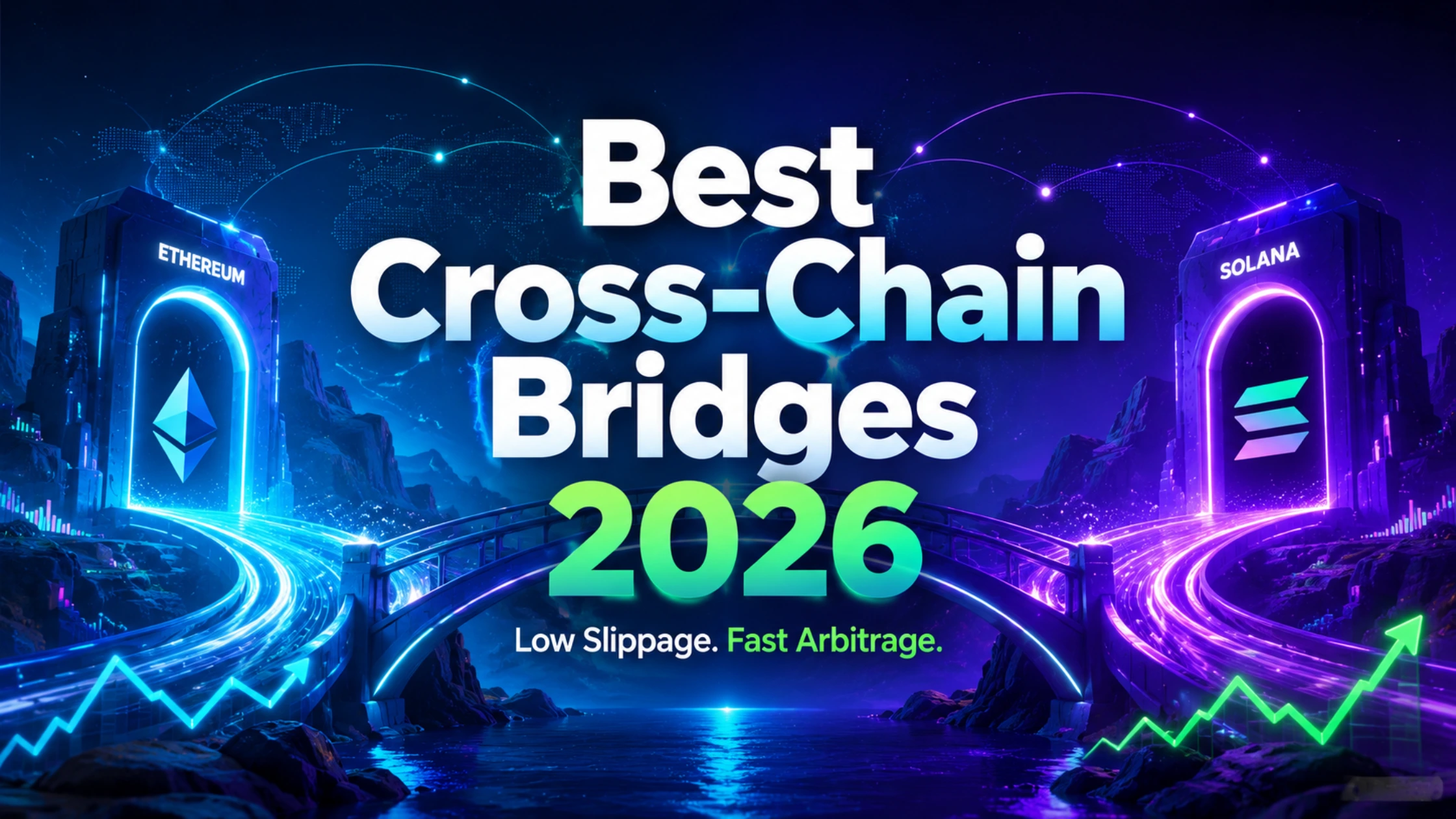
Best Low-Slippage Cross-Chain Liquidity Bridges for Fast Crypto Capital Arbitrage in 2026
Key Takeaways (DN Bridge Benchmarks)
- Intent Engines vs. Lock-and-Mint: Legacy cross-chain bridges relying on lock-and-mint wrapped tokens carry catastrophic smart contract exploit risks and high slippage. Modern intent-based bridge engines like deBridge DLN use peer-to-peer solver networks to guarantee exact fill rates with zero unexpected slippage.
- Sub-Minute Cross-Chain Settlement: Intent-based messaging allows capital to move across EVM networks (Arbitrum, Base, Optimism, Ethereum Mainnet) and non-EVM chains (Solana) in under 30 seconds.
- Instant Non-Custodial Swaps: Platforms like ChangeNOW and SideShift.ai provide accountless, direct wallet-to-wallet cross-chain swaps without requiring KYC, perfect for fast operational liquidity rebalancing.
Featured Cross-Chain Bridge Outlets & VIP Execution Portals
Transfer capital instantly across chains with zero MEV sandwich risk and minimal fees using our verified partner portals:
- 🔹 deBridge DLN (Intent-Based Cross-Chain): Launch deBridge Low-Slippage Portal — Partner Link:
20473 - 🔹 ChangeNOW (Instant Non-Custodial Swap): Swap Crypto Non-Custodially on ChangeNOW — Partner Link Active
- 🔹 SideShift.ai (AI-Powered Instant Swap): Exchange Tokens on SideShift.ai — Referral Code:
kfzebqGDn
1. The Paradigm Shift: Why Intent-Based Bridges Dominating 2026
In the early era of multi-chain DeFi, moving capital from Ethereum to Arbitrum or Solana required using lock-and-mint wrapped bridges. These legacy bridges locked native tokens in a centralized smart contract vault on Chain A and minted a synthetic wrapped token on Chain B.
This model suffered two fatal vulnerabilities:
- Honeypot Exploits: Smart contract vaults holding billions in locked collateral became prime targets for multi-hundred-million-dollar hacks (e.g., Ronin, Wormhole).
- High Slippage & Wrapped Asset Friction: Traders received wrapped tokens (like wETH or hUSDC) that required secondary DEX swaps, burning additional gas and suffering heavy slippage.
In 2026, intent-based cross-chain infrastructure has rendered wrapped bridges obsolete. By utilizing off-chain solver networks that fulfill user trades peer-to-peer using native liquidity, intent-based engines deliver 0% unexpected slippage, sub-30-second finality, and zero locked vault TVL.
To determine which platforms offer the fastest routing and lowest fees for cross-chain arbitrage, Decentralised News audited top bridging protocols across EVM and non-EVM ecosystems.
2. DN Cross-Chain Finality & Fee Index (DN-CCFFI) Framework
Our research team evaluates bridging protocols using five quantitative criteria:
- Order Finality Latency (OFL): Total time elapsed (in seconds) from transaction signing on Chain A to native funds landing in the destination wallet on Chain B.
- Slippage Variance Score: Difference between quoted output estimates and final delivered balance.
- Smart Contract Vault Risk (TVL Exposure): Amount of locked capital sitting in honeypot smart contracts.
- MEV & Front-Running Protection: Susceptibility to sandwich attacks during the cross-chain execution phase.
- Cross-EVM & Non-EVM Compatibility: Seamless routing across Solana, Bitcoin, Arbitrum, Base, and Ethereum.
3. Cross-Chain Bridge Performance Benchmark Matrix
Below are the empirical metrics from our 30-day cross-chain testing across EVM and Solana ecosystems:
| Platform | Architecture Model | Avg Settlement Time | Slippage Rate | Smart Contract TVL Risk | Verified Partner Portal |
|---|---|---|---|---|---|
| deBridge (DLN) | Intent-Based Solver Competition | < 25 Seconds | 0% Unexpected | 0-TVL (Zero Honeypot) | deBridge DLN Portal (20473) |
| ChangeNOW | Non-Custodial Liquidity Aggregator | 1 - 3 Minutes | Fixed / Floating | Non-Custodial Accountless | ChangeNOW Swap Portal |
| SideShift.ai | Automated Instant Exchange | 1 - 2 Minutes | Fixed / Floating | Non-Custodial Accountless | SideShift.ai Portal (kfzebqGDn) |
| Legacy Pool Bridges | Lock-and-Mint Vaults | 5 - 15 Minutes | Variable / High | High (Large Lockup Vaults) | Not Recommended for Large Sizes |
4. Platform Deep Dives: Top Cross-Chain Outlets
1. deBridge (DLN) — The Gold Standard for Intent-Based Bridging
deBridge is the undisputed leader in cross-chain speed and security. Through its deBridge Liquidity Network (DLN), deBridge replaces liquidity pool lockups with an open competition between professional solvers.
Key Highlights: Sub-30-second cross-chain finality between EVM chains and Solana, 0% unexpected slippage, and a zero-TVL architecture that eliminates smart contract bridge honeypot risks.
💡 Arbitrage Pro Tip: Use the official deBridge DLN Portal to lock in guaranteed rates with zero MEV sandwich risk when moving capital across chains.
2. ChangeNOW — Instant Accountless Swaps Across 900+ Tokens
ChangeNOW is a non-custodial instant swap platform designed for rapid wallet-to-wallet exchanges without requiring registration, KYC, or account creation.
Key Highlights: Aggregates liquidity across 75+ blockchains, supporting both Fixed Rate and Classic Rate modes for instant operational reserve rebalancing.
💡 Arbitrage Pro Tip: Rebalance cross-chain operational reserves instantly via the ChangeNOW Swap Portal.
3. SideShift.ai — AI-Driven Rapid Crypto Exchange
SideShift.ai is an automated crypto exchange that allows users to shift between dozens of cryptocurrencies quickly and non-custodially.
Key Highlights: Clean deposit address architecture enabling rapid wallet-to-wallet execution without account setup.
💡 Arbitrage Pro Tip: Execute rapid token shifts using SideShift.ai Code kfzebqGDn.
Frequently Asked Questions (FAQ)
Why are intent-based bridges safer than traditional liquidity pool bridges?
Intent-based bridges (like deBridge DLN) do not store collateral in large smart contract vaults onchain. Instead, professional solvers fulfill trades peer-to-peer using their own capital. Because there is no central honeypot of locked funds, intent-based bridges eliminate the risk of massive smart contract bridge hacks.
How long does it take to bridge USDC from Arbitrum to Solana using deBridge?
In our benchmark tests, deBridge DLN consistently executes cross-chain transfers between Arbitrum and Solana in under 30 seconds, making it one of the fastest bridges in Web3.
Can I bridge crypto without completing KYC verification?
Yes. Non-custodial bridging protocols like deBridge DLN and instant swap services like ChangeNOW and SideShift.ai operate wallet-to-wallet without requiring user accounts or KYC verification.