While the mainstream media obsesses over every minor fluctuation in Bitcoin and Ethereum, a silent revolution is happening in the deeper corners of the crypto market. Sophisticated AI trading agents, unburdened by human emotion and capable of processing millions of data points per second, are looking beyond the obvious. They are secretly accumulating specific types of altcoins, positioning themselves for the next wave of growth based on cold, hard data. So, what do these AIs know that you don’t?
The allure of altcoins for an AI is simple: higher volatility and emerging narratives create more opportunities for alpha (returns above the market average). But AIs don’t “ape” into trends. They analyze, quantify, and execute with precision.
By understanding the criteria AIs use, you can learn to spot these opportunities yourself, long before they hit the mainstream.

The AI’s Secret Checklist: What It Looks for in an Altcoin
An AI trader doesn’t care about hype; it cares about data patterns. Here’s a glimpse into its “secret” checklist for evaluating an altcoin’s potential:
- High-Quality Data Flow: AIs thrive on data. Projects with active GitHub repositories, high-frequency on-chain transaction data, and a constant stream of social media and news mentions provide the rich datasets needed for predictive modeling.
- Quantifiable Narrative & Sector Strength: AI excels at sentiment analysis. It can measure the “strength” of a narrative like AI, DePIN (Decentralized Physical Infrastructure Networks), or GameFi by tracking keyword mentions, influencer engagement, and capital rotation between sectors.
- Positive On-Chain Momentum: AIs scan the blockchain for tell-tale signs of accumulation. This includes a growing number of active wallets, an increase in large “whale” transactions, and tokens moving off exchanges into private wallets (a sign of long-term holding).
- Optimal Volatility & Liquidity: An AI looks for the sweet spot. The asset needs enough volatility to generate profitable price swings but enough liquidity (trading volume) to allow for entering and exiting large positions without causing massive price slippage.
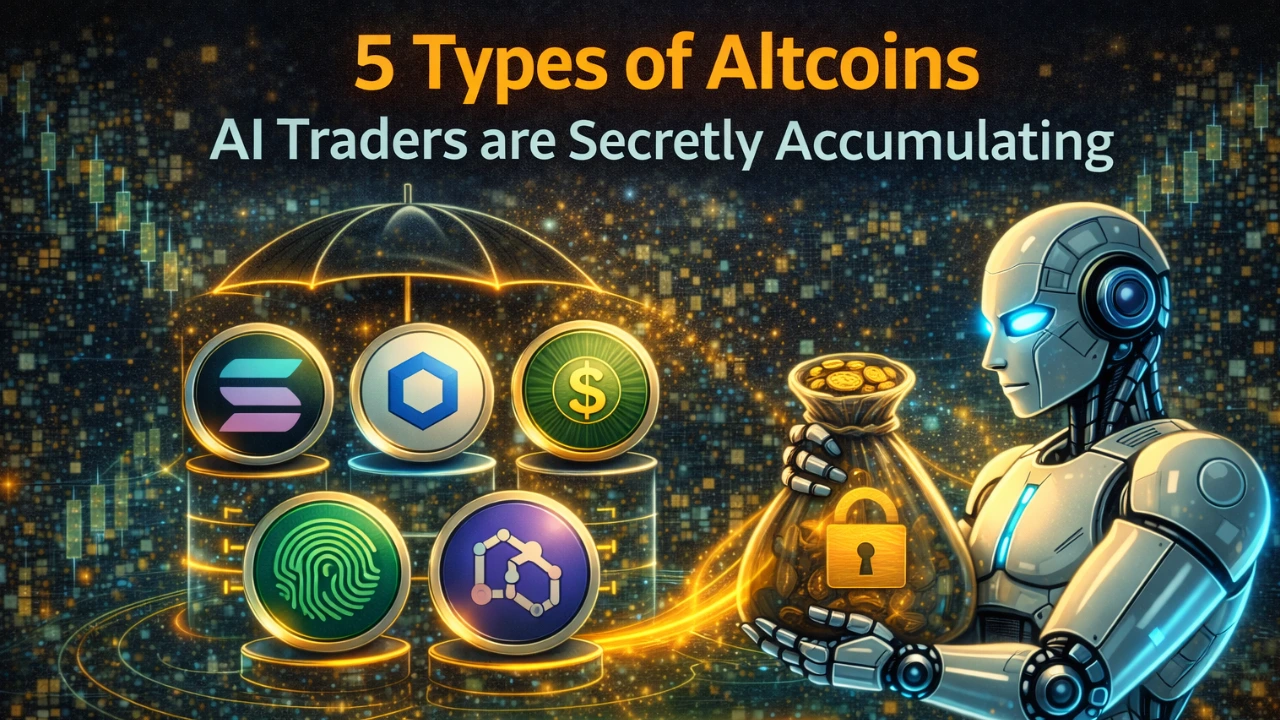
Based on these criteria, here are 5 “types” of altcoins that consistently appear on the radar of AI trading systems.

1. The “AI Infrastructure” Plays
Why AIs Love Them: This is a self-reflexive play. AIs understand the value of the infrastructure they run on. Coins that power decentralized GPU sharing networks, AI data marketplaces, or decentralized machine learning protocols are prime targets. The AI can directly quantify the network’s usage, computational demand, and data value, making it a highly predictable investment thesis.
Where to Find Them: Look for these in the “AI” or “Big Data” categories on major exchanges. Platforms like MEXC and KuCoin are often quick to list promising new AI-related projects, offering a chance for early discovery.
2. The “DePIN” Workhorses
Why AIs Love Them: DePIN projects (Decentralized Physical Infrastructure Networks) use tokens to incentivize the creation of real-world infrastructure, like wireless networks, data storage, or energy grids. For an AI, this is a goldmine of measurable, real-world data. It can track network growth, hardware deployment, and revenue generation, creating models that are less susceptible to pure market speculation.
Where to Find Them: DePIN is a rapidly growing sector. You can find established and emerging DePIN tokens on comprehensive exchanges like Binance and OKX, which provide deep liquidity for these assets.

3. The “Gaming & Metaverse” Tokens
Why AIs Love Them: Blockchain gaming generates massive, predictable datasets. An AI can analyze player activity, in-game asset sales, daily active users, and token burn rates to model a game’s economic health. These ecosystems often follow predictable cycles tied to game updates, new seasons, or tournaments, providing clear opportunities for data-driven trades.
Where to Find Them: The “Gaming/GameFi” and “Metaverse” sections of exchanges are where you’ll find these. Bybit is known for its strong presence in the gaming token space, often featuring launchpads for new and exciting GameFi projects.

4. The “Layer 2” Scalability Solutions
Why AIs Love Them: Layer 2 (L2) protocols are built to help major blockchains like Ethereum scale, making them faster and cheaper. For an AI, the investment thesis is crystal clear and quantifiable. It can track the L2’s Total Value Locked (TVL), transaction volume, user adoption rates, and its market share relative to competitors. The success of an L2 is directly tied to the growth of its parent chain, creating a strong, data-rich correlation.
Where to Find Them: L2 tokens are some of the most prominent altcoins in the market. You can find all the major ones on virtually every top-tier exchange, including Bitget and BingX, which offer robust spot and futures trading for these assets.

5. The “Real-World Asset (RWA)” Bridges
Why AIs Love Them: RWA projects focus on tokenizing real-world assets like real estate, bonds, or private credit and bringing them onto the blockchain. This is incredibly attractive to an AI because it bridges the chaotic crypto world with the more predictable data of traditional finance. An AI can run models that incorporate interest rates, credit yields, and real estate data to value these tokens, opening up entirely new avenues for sophisticated, cross-market analysis.
Where to Find Them: The RWA sector is still emerging but gaining significant traction. Look for it on forward-thinking exchanges. Keep an eye on listings on major platforms, as they will likely be the first to offer liquid markets for the most promising RWA tokens.

How to Think Like an AI
You don’t need to be a machine to invest like one. The key takeaway is to look beyond the hype and focus on the data. Before investing in an altcoin, ask yourself the questions an AI would:
- Is the data flow rich and transparent?
- Is there a quantifiable narrative and measurable on-chain growth?
- Is there enough liquidity to trade effectively?
By adopting this data-first mindset, you can start to identify the high-potential altcoins that sophisticated AI traders are targeting, giving you a powerful edge in the fast-moving world of crypto.
Start Here — Build Your Crypto Infrastructure Safely
You don’t need to use everything at once.
Professionals reduce risk by having access to multiple rails so they are never dependent on a single platform.
Below is a simple, practical setup used by many experienced traders and investors.
1) Your Fiat Gateway (Primary Access)
Best starting point for deposits & withdrawals
Binance — reliable onboarding, deep liquidity, global coverage
👉 sign up
Why open this:
- Move from bank → crypto easily
- Convert large amounts efficiently
- Emergency exit capability
2) Your Trading Execution Venue (Fast & Flexible)
Best for active trading and broad market access
MEXC — huge altcoin selection & low trading friction
👉 sign up
Why open this:
- Trade markets not listed elsewhere
- Better execution during volatility
- Lower dependence on a single exchange
3) Your Advanced Tools & Derivatives Platform
Best for leverage, hedging and professional execution
Bybit — strong order controls & derivatives infrastructure
👉 sign up
Why open this:
- Proper stop loss tools
- Hedging capability
- Strategy flexibility
4) Your Yield & Passive Income Layer
Best for structured products and capital efficiency
Gate.com — structured yield & automated earning tools
👉 sign up
Why open this:
- Earn on idle capital
- Diversify platform risk
- Access structured strategies

5) Your Altcoin & Ecosystem Expansion Layer
Best for early market access and wide listings
KuCoin — broad token ecosystem
👉 sign up
Why open this:
- Access emerging markets
- Portfolio diversification
- Redundancy if one platform restricts access
Why This Structure Matters
Using one exchange creates a single point of failure.
Using multiple rails creates:
- Liquidity redundancy
- Faster reaction ability
- Lower operational risk
- Greater opportunity access
You don’t need large capital to start — you just need prepared infrastructure.
Practical Next Step
Open accounts gradually and verify them before you need them.
Most people only prepare during stress —
professionals prepare before it.
(Decentralised News provides infrastructure education, not financial advice. Always use proper security practices.)