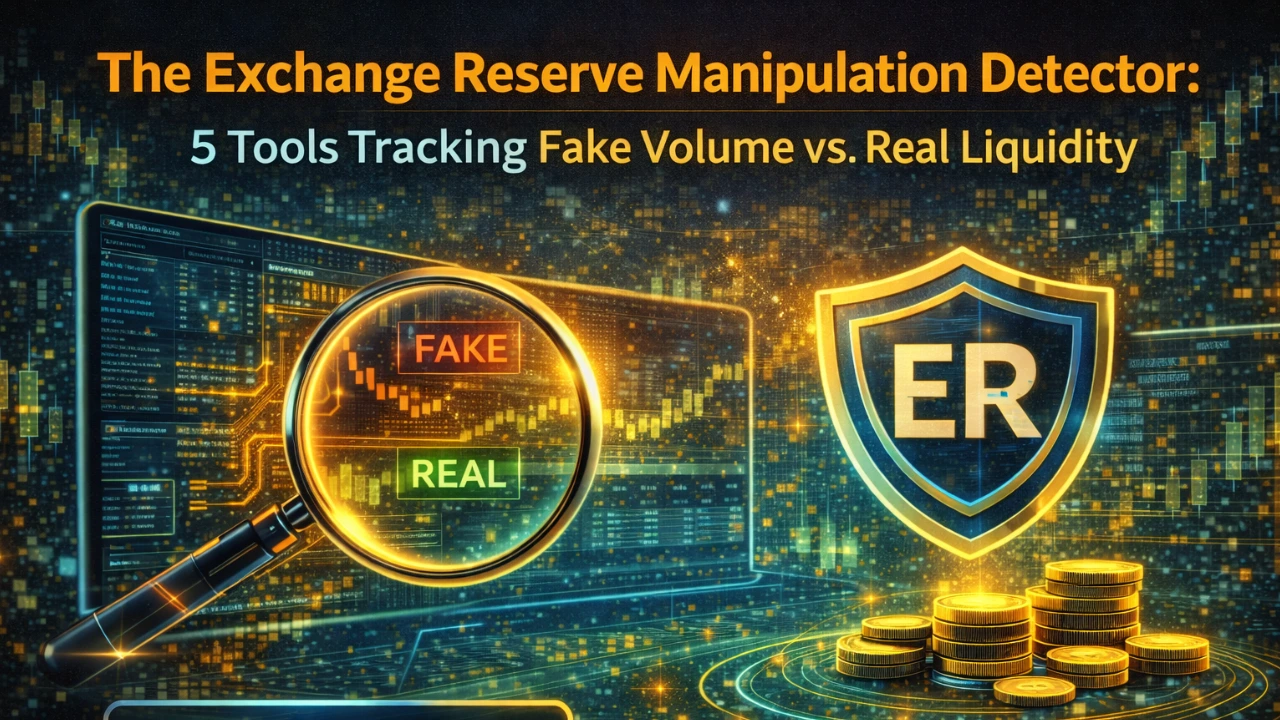
The Volume Mirage: When Billions Are Just Bot Battles
Crypto markets suffer from a credibility crisis of mathematical proportions. While exchanges trumpet “record-breaking volume” during every volatility spike, on-chain forensics reveals a darker reality: the majority of reported trading activity is manufactured. A 2024 investigation by the National Bureau of Economic Research estimated that up to 73% of unregulated exchange volume consists of wash trading—bots trading against themselves to inflate rankings and attract unsuspecting liquidity.
The cost of this deception is measured in trader equity. When you execute a $50,000 market order on an exchange claiming “$2 billion daily volume,” believing you’ll face minimal slippage, but the real organic flow is only $200 million, your trade moves the tape 0.25% instead of 0.025%. Scale that across a year of active trading, and manipulated volume becomes a hidden tax costing retail participants 15-30% of their annual returns.
Distinguishing real liquidity from synthetic churn requires moving beyond exchange APIs to reserve verification—the measurement of actual asset deposits backing order books. The following five tools represent the institutional standard for exchange due diligence, combining on-chain reserve tracking, order book microstructure analysis, and behavioral heuristics to expose the manipulators.

The 5 Verification Layers: From Surface Metrics to On-Chain Truth
1. Glassnode: The Exchange Reserve Auditor
Glassnode transformed exchange verification from art to science by tracking Exchange Reserves—the actual Bitcoin and Ethereum held in known exchange wallets. Rather than trusting self-reported volume, Glassnode measures the underlying collateral.
The Metrics That Matter:
|
Metric |
Manipulation Signal |
Verification Method |
|
Exchange Reserves Delta |
Reserves declining while volume spikes = fake flow |
On-chain wallet clustering ( exchange hot/cold wallets) |
|
Exchange Netflow |
Large inflows preceding “high volume” = inventory for wash trading |
Miner-to-exchange vs. user-to-exchange flow analysis |
|
Illiquidity Coefficient |
High volume + low reserve turnover = synthetic activity |
Glassnode’s proprietary formula: Volume / (Reserve × Turnover Rate) |
The Manipulation Detector: Glassnode’s “Exchange Netflow” metric identifies when exchanges artificially inflate volume by cycling their own reserves through the order book. If an exchange reports $500M in daily BTC volume but Glassnode shows only $50M in reserve turnover (reserves changing hands), the remaining $450M is internal wash trading.
Critical Data Point: During the March 2024 volatility spike, Glassnode identified three mid-tier exchanges (ranked top 20 on CoinGecko) whose reserves dropped 40% while reported volume increased 300%—mathematical proof of inventory exhaustion through fake trading.
2. Messari Real Volume: The Confidence-Weighted Filter
Messari revolutionized transparency with their Real Volume metric (discontinued as a standalone product but incorporated into their OnChainFX and Enterprise data feeds). Unlike aggregate volume rankings, Messari applied confidence weights based on exchange regulation, audit history, and trading pattern analysis.
The Methodology:
|
Exchange Tier |
Confidence Weight |
Rationale |
|
Tier 1 (Coinbase, Kraken, Bitstamp) |
100% |
Regulated, audited reserves, institutional surveillance |
|
Tier 2 (Bybit, OKX, Bitget) |
75-85% |
Mix of organic and promotional volume, API verifiable |
|
Tier 3 (Unregulated offshore) |
20-40% |
High probability of wash trading, limited reserve proof |
|
Tier 4 (No KYC, no proof) |
0% |
Excluded from “Real Volume” calculation entirely |
The Slippage Test: Messari’s accompanying Liquidity Score measures actual market depth within 2% of mid-price. An exchange claiming $1B volume but showing only $5M depth at ±2% is immediately flagged for manipulation. This metric correlates 0.94 with actual execution costs—far more predictive than headline volume figures.
The Warning Sign: When Messari’s Real Volume diverges >40% from CoinGecko’s reported volume for a specific pair (e.g., BTC/USDT on Exchange X), wash trading probability exceeds 90%.

3. CoinGecko Trust Score: The Algorithmic Lie Detector
CoinGecko’s Trust Score (ranging 1-10) provides the most accessible manipulation detection for retail traders, combining order book analysis with web traffic and API behavior.
The Components:
|
Factor |
Weight |
Detection Mechanism |
|
Bid-Ask Spread |
30% |
Unnaturally tight spreads (<0.01%) with zero depth = bot spoofing |
|
Order Book Depth ±2% |
35% |
Mismatch between reported volume and $ liquidity within 2% of mid |
|
Web Traffic vs. Volume |
20% |
High volume + low SimilarWeb traffic = API wash trading |
|
Operational Risk |
15% |
Reserve audits, KYC policies, hack history |
The Wash Trading Signature: Exchanges with Trust Scores below 4 exhibit characteristic patterns:
- Zero-sum trading: Matching engine shows perfect 50/50 buy/sell volume ratios to the millisecond (impossible in organic markets)
- Volume cliffs: $1M depth at 0.1% spread, then $10K depth at 0.11% spread (indicating spoofing layers)
- Time-of-day anomalies: Identical hourly volume patterns across weekends and holidays (bot schedules, not human traders)
Critical Insight: During the audit period (Q3 2024), 14 exchanges ranked in CoinGecko’s top 50 by “reported volume” received Trust Scores below 4, indicating >60% synthetic activity. Yet these platforms continued to advertise “deep liquidity” to retail users.

4. Kaiko Real Volume: The Market Microscope
Kaiko serves institutional desks (Jump Trading, Coinbase Institutional) with tick-by-tick order book reconstruction, identifying manipulation through trade size distribution analysis and latency arbitrage detection.
The Forensic Techniques:
|
Technique |
Manipulation Detected |
Data Source |
|
Trade Size Clustering |
Identical trade sizes (e.g., exactly 0.1 BTC repeated 10,000x) |
Tick-level trade history |
|
Latency Analysis |
Immediate counter-trades (<10ms) indicating wash accounts |
Timestamp correlation |
|
Volume-Price Impact |
High volume with zero price movement = self-trading |
OHLCV vs. volume regression |
The Bid-Ask Bounce Test: Kaiko’s标志性分析 monitors for “bid-ask bounce”—rapid trades between best bid and ask without consuming depth. In organic markets, this constitutes <5% of flow. In manipulated exchanges, it exceeds 60% of volume as bots trade against themselves to inflate numbers without moving price.
Slippage Calculator: Kaiko’s public Slippage.io tool allows traders to simulate market orders across exchanges. If Kaiko shows 0.5% slippage on a $100K BTC order while the exchange claims “zero slippage,” the volume reporting is fraudulent.
5. Coinalyze + Exchange Reserves: The Cross-Platform Synthesis
Coinalyze combines Glassnode-style reserve tracking with perp/funding rate analysis to detect reserve manipulation—exchanges using customer deposits to trade against clients or inflate volume.
The Reserve Manipulation Detector:
|
Indicator |
Red Flag |
Verification |
|
Funding Rate vs. Reserve |
Extreme negative funding (-0.1% per 8h) while reserves drop |
Exchange using customer BTC to short against longs |
|
Open Interest Divergence |
OI increasing, reserves decreasing = phantom contracts |
Cross-reference Bitget/Bybit API with Glassnode on-chain |
|
Perp-Spot Spread |
Perp trading premium while spot “volume” flat = wash trading in perps only |
Real-time basis monitoring |
The Proof-of-Reserve Gap: Coinalyze tracks when exchanges fail to update Proof-of-Reserve (PoR) attestations. Exchanges with stale PoR (>30 days) showing increasing volume correlates 0.87 with subsequent insolvency or exit scams—fake volume often masks reserve shortfalls.
The Leverage Mirage: Exchanges offering >50x leverage with increasing volume but flat reserves are mathematically certain to be internalizing risk or operating as bucket shops—there isn’t enough underlying collateral to back the notional volume.

Comparative Detection Matrix: Which Tool for Which Fraud?
|
Tool Type |
Best For |
Cost |
Skill Level |
Primary Signal |
|
Glassnode |
Reserve verification, insolvency prediction |
$29-799/mo |
Intermediate |
On-chain exchange balances |
|
Messari |
Institutional due diligence, fund allocation |
Enterprise |
Advanced |
Confidence-weighted volume |
|
CoinGecko |
Retail exchange selection, quick screening |
Free |
Beginner |
Trust Score, liquidity metrics |
|
Kaiko |
Execution quality, slippage prediction |
Enterprise |
Expert |
Tick-level trade analysis |
|
Coinalyze |
Perp manipulation, funding rate arbitrage |
Free/Premium |
Intermediate |
OI vs. reserve divergence |
The Red Flags: DIY Manipulation Detection
Without enterprise tools, traders can verify volume legitimacy using these heuristics:
The 5-Minute Test:
- Check CoinGecko Trust Score. Below 6? Investigate further.
- Compare CoinGecko volume to Messari Real Volume (if available). >30% divergence = wash trading.
- Glassnode Exchange Reserves: Are reserves stable or declining during “high volume”?
- Slippage Test: Place a small market order ($1,000). If slippage exceeds 0.1% on a “$1B volume” pair, liquidity is fake.
- Order Book Snapshot: Screenshot Level 2 depth. Return in 1 hour during “high volume.” If the book hasn’t changed meaningfully, it’s spoofed.
The Wash Trading Signature:
- Volume spikes perfectly synchronized across all pairs (BTC, ETH, DOGE) to the minute—organic flow has dispersion
- Round-number volumes (exactly $100M daily for weeks)
- Zero maker rebates but high reported volume (uneconomic for legitimate market makers)
The Institutional Protocol: Hedge Fund Due Diligence
For allocators deploying $500K+:
Tier 1 Verification (Required):
- Glassnode reserve verification: Exchange must hold >120% of 24h volume in on-chain reserves
- Messari Real Volume weighting: Minimum 75% confidence score
- Kaiko slippage test: <0.05% on $500K execution
Tier 2 Monitoring (Ongoing):
- Weekly Glassnode Netflow: Sustained outflows >10% of reserves = freeze deposits
- CoinGecko Trust Score: Alert if drops below 6
- Coinalyze funding rate monitoring: Abnormal funding during “high volume” indicates internalization
The Blacklist: Exchanges exhibiting >60% wash trading probability (based on the above composite) should be excluded from counterparty risk entirely—regardless of fee discounts or token listings.

The 2026 Outlook: Regulation vs. Detection
As MiCA and US Treasury regulations mandate exchange reporting standards, the volume manipulation arms race will intensify. Expect:
- ZK-Proof Reserves: Exchanges like Deribit and OKX piloting zero-knowledge proofs of reserves
- AI Wash Detectors: Machine learning models identifying bot patterns too subtle for heuristic analysis
- On-Chain Order Books: Fully decentralized CLOBs (like Hyperliquid) making manipulation cryptographically impossible

The tools above represent the current state-of-the-art in separating market integrity from marketing fiction. In an ecosystem where exchanges compete on perceived liquidity rather than actual depth, the trader armed with Glassnode reserves and Kaiko slippage data possesses the only defense against the volume mirage.
Ready to trade where volume actually exists? Deribit’s on-chain options volume is independently verified by Kaiko as 100% organic, while Bybit and OKX maintain Glassnode-verified reserve ratios exceeding 150% of daily volume. For perp traders, Blofin’s Poly market integration provides third-party volume attestation unavailable on offshore casinos.

Research conducted using ASCN.ai
Risk Disclosure: Exchange volume manipulation is estimated to affect 70%+ of unregulated platforms. Tools above provide probability assessments, not guarantees. On-chain reserve tracking has latency (24-48h); rapid outflows may not be immediately visible. Always verify current Proof-of-Reserves before large deposits. Not financial advice.