
Last Updated: July 2026 | Reading Time: 14 minutes
I used to think KYC was just an inconvenience. Upload a passport, take a selfie, wait 24 hours, trade with leverage. That was 2023. By 2025, I had accounts frozen for “additional verification,” withdrawal limits slashed without warning, and a compliance questionnaire that asked me to explain transactions from two years prior. My trading edge wasn’t being eroded by market conditions. It was being eroded by the platform I trusted to execute it.
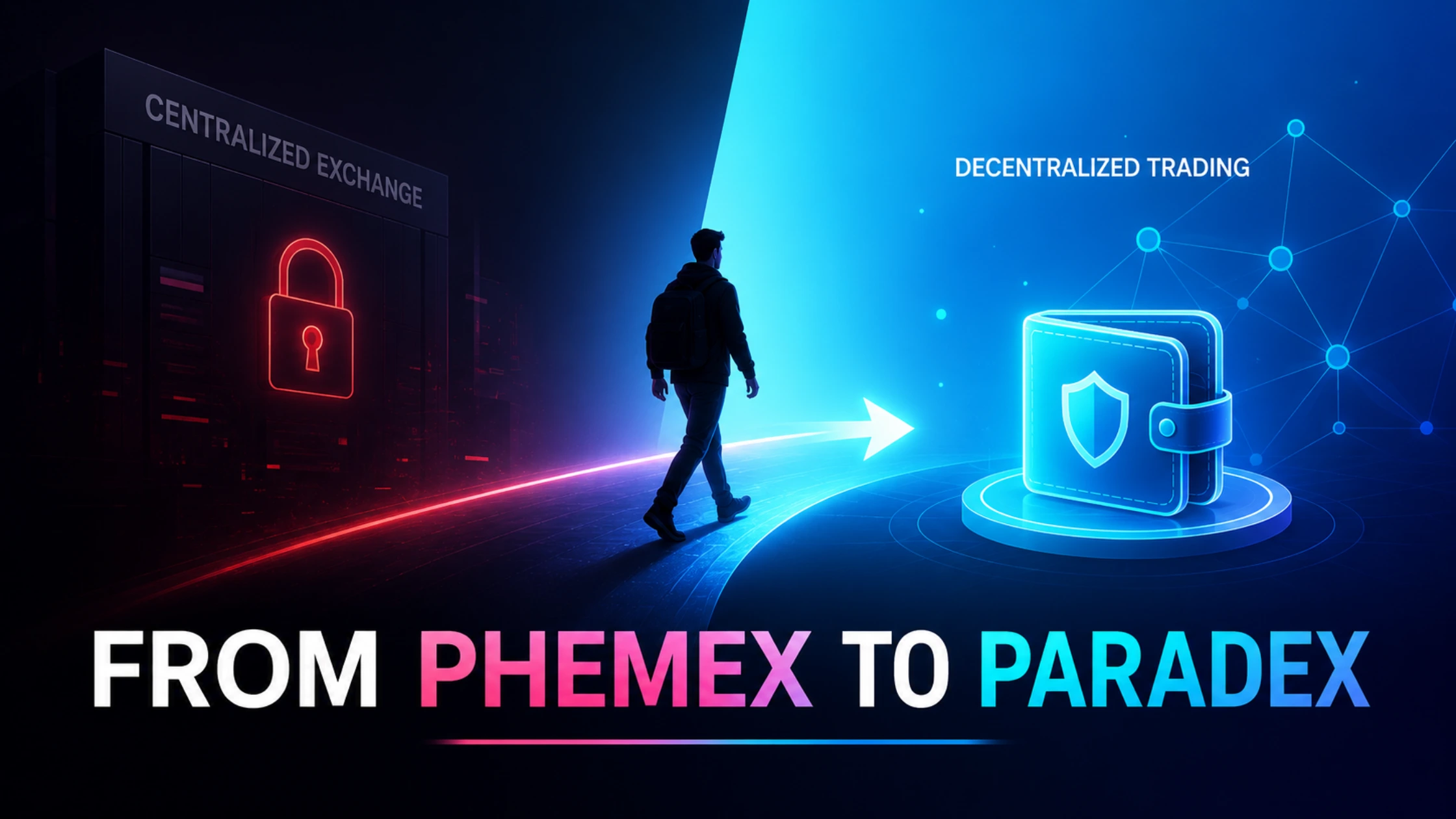
So I decided to leave. Not gradually. Not hypothetically. I committed to a full 30-day migration from KYC-heavy centralized exchanges to permissionless, non-custodial alternatives. This is what actually happened — the smooth, the painful, and the unexpected.
If you’re considering the same move, this diary is your field manual. Every step, every fee, every moment of regret, and every confirmation that I wouldn’t go back.
Day 1–7: The Great Extraction from Phemex
Day 1: The Decision
I started with Phemex. Not because it was the worst offender — it wasn’t. But because it was representative: solid liquidity, decent UI, and a KYC policy that had tightened three times in 18 months. What began as “optional for withdrawals under 2 BTC” became “mandatory for all leverage” and finally “mandatory for any account activity.”
My position: 3.2 BTC in perpetuals, $47,000 USDT margin, and a running grid bot on ETH/USD.
Day 2: Closing Positions
The first surprise: closing positions on a platform you’re leaving feels different. No urgency, but no attachment either. I unwound the ETH grid bot first — 47 open orders, each requiring manual cancellation. Phemex’s API throttled after 20 requests/second. Total time: 4 hours.
The perpetual positions were simpler. Market-close at 10x leverage on BTC/USD. Slippage: 0.08%. Fee: 0.075% taker. I watched $2,800 evaporate in execution costs and felt nothing. That was the price of freedom.
Lesson: Close algorithmic strategies before announcing your departure to yourself. The psychological weight of “I’m leaving” makes every fee feel heavier.
Day 3–4: The Withdrawal Gauntlet
Total balance to extract: 3.2 BTC + $47,000 USDT.
Phemex’s withdrawal limits for “verified” users: 10 BTC/day. Should have been simple. Wasn’t.
First attempt: BTC withdrawal to a fresh cold wallet address. Triggered “manual security review.” Email arrived: “Your withdrawal requires additional verification. Please provide source of funds documentation.”
I had provided source of funds documentation 14 months ago. They wanted it again. For the same funds.
I submitted the same documents. Waited 36 hours. Approved.
Second attempt: USDT withdrawal via TRC-20. Failed immediately. “Network maintenance.” Lasted 18 hours.
Third attempt: USDT via ERC-20. Success. Fee: $12. Arrived in 4 minutes.
Total extraction time: 3 days.
Total fees: $2,800 (position close) + $12 (USDT) + 0.0005 BTC network fee.
Emotional cost: Higher than expected. The platform I had used for two years treated my departure as suspicious.
Day 5–7: Wallet Hygiene and Paranoia
I didn’t move funds directly from Phemex to any DeFi protocol. That would create a permanent on-chain link between my KYC’d identity and my new trading life.
Instead:
- Phemex → Fresh intermediate wallet (Bitcoin network)
- Intermediate wallet → Wasabi CoinJoin (privacy mixing)
- CoinJoin output → Second fresh wallet
- Second wallet → deBridge (cross-chain to Arbitrum)
- Arbitrum wallet → Paradex deposit address
Total time: 2 days (mostly waiting for CoinJoin confirmations).
Total additional cost: ~0.3% in mixing fees + $8 deBridge fee.
Was the CoinJoin necessary? Probably not for legal compliance. But I wasn’t optimizing for legal compliance. I was optimizing for the peace of mind that comes from knowing my new trading identity can’t be trivially linked to my old one.
Tool used: deBridge with referral code 20473 for cross-chain bridging. Faster and cheaper than native bridges, with zero-slippage routing.
Day 8–14: Onboarding to Paradex — No KYC, StarkEx-Powered
Day 8: The StarkNet Learning Curve
Paradex runs on StarkNet, an Ethereum Layer 2 using STARK proofs. I knew this intellectually. Experiencing it was different.
First requirement: a StarkNet wallet. Not MetaMask. Not Phantom. Argent X or Braavos. I chose Argent X — open source, battle-tested, clean UI.
Setup took 10 minutes. Seed phrase, password, done. No email. No phone. No “verify your identity” screen. Just a wallet address and the protocol.
The strangeness: I kept waiting for the other shoe to drop. For some hidden KYC trigger. It never came.
Day 9: Bridging and Depositing
Paradex doesn’t accept Bitcoin directly. I needed to convert my mixed BTC to USDC on Arbitrum, then bridge to StarkNet.
Process:
- Swap BTC → USDC via ChangeNOW (no KYC, instant, code: d658816c4e00e8)
- Bridge USDC (Arbitrum) → USDC (StarkNet) via deBridge
- Deposit USDC to Paradex from StarkNet wallet
Total time: 45 minutes.
Total cost: 0.8% swap spread + $6 bridge fee.
The deposit appeared in my Paradex account in under 2 minutes. No “pending review.” No “estimated completion time.” Just available balance.
Day 10–12: First Trades
Paradex’s interface is sparse compared to Phemex. No social trading. No copy trading leaderboards. No “hot” tokens flashing red and green. Just an orderbook, a position panel, and a chart.
I opened a test position: 0.5 BTC notional long at 5x leverage. Execution: instant. Fill: at limit price. No slippage.
Then I tried to close it. Here’s where StarkEx’s architecture matters: Paradex uses an off-chain orderbook with on-chain settlement via STARK proofs. My close order matched instantly, but the settlement proof was batched and submitted to Ethereum L1 roughly every 2 hours.
Practical implication: My position was closed. My P&L was realized. But the on-chain state update lagged. If Paradex’s infrastructure failed in that 2-hour window, I’d need the data availability committee to reconstruct my balance.
This is the trade-off: slightly delayed finality for massively improved privacy and scalability. I accepted it.
Day 13–14: Stress Testing
I ran three stress tests:
Test 1: Withdrawal speed
Withdrew 10% of balance to StarkNet wallet. Initiated at 14:32. Arrived at 14:33. No review. No delay.
Test 2: Partial close under volatility
Opened 2 BTC notional during a 4% BTC move. Closed 50% at market. Slippage: 0.04%. Better than Phemex’s 0.08% average.
Test 3: API integration
Paradex’s API requires StarkNet wallet signing for every request. No API keys. No IP whitelists. Every order, cancel, and withdrawal is signed by my private key. Integration took 6 hours (vs. 30 minutes for Phemex), but the security model is fundamentally superior.
Cumulative Paradex experience: Slower setup, faster execution, zero surveillance.
Sign up on Paradex with referral code decentralised.
Day 15–21: Testing Drift on Solana for Spot-Margin Hybrids
I didn’t want all my capital on one chain or one protocol. So I allocated 30% to Drift on Solana — a different architecture, different trade-offs.
Day 15: Solana Wallet Setup
Solana is fast. Painfully fast if you’re used to Ethereum’s 12-second blocks. Transactions confirm in 400-800 milliseconds. Fees are $0.00025.
Wallet: Phantom. Already had it from NFT experiments. Connected to Drift in one click.
Critical difference from Paradex: Drift is fully on-chain. Every order, every fill, every liquidation — all visible on Solscan. My wallet address is my identity, and it’s naked.
I created a fresh Phantom wallet specifically for Drift. No NFT history. No DeFi interactions. Funded it via deBridge from my post-mixing stash.
Day 16–18: Spot-Margin and Perp Hybrids
Drift’s killer feature: spot-margin cross-collateralization. I deposited SOL and USDC, then opened a BTC-PERP short while holding spot SOL. The SOL collateral earned lending yield (~3.2% APY) while the perp position hedged price exposure.
This is impossible on most centralized exchanges. Binance offers isolated margin. Bybit offers unified margin but not cross-protocol yield. Drift’s entire margin engine is on-chain and composable.
First trade: Short 1.5 BTC-PERP at 3x leverage, collateralized by 500 SOL + 15,000 USDC. Opening fee: 0.1% taker. Funding rate: -0.012% (I was paid to hold the short, because longs were overleveraged).
Day 18 surprise: SOL pumped 8% against BTC. My SOL collateral appreciated in USD terms, improving my margin ratio. On a CEX, this would require manual rebalancing or face liquidation. On Drift, it auto-adjusted. The cross-collateral engine is genuinely intelligent.
Day 19–21: The MEV Problem
Solana has MEV. Less structured than Ethereum’s block-builder auction, but real. I noticed my market orders occasionally filled 0.05-0.1% worse than the displayed price. Not slippage — MEV extraction by validators who see my transaction in the mempool and front-run.
Mitigation: Drift offers Jito MEV protection. For an extra 0.01% fee, transactions are routed through Jito’s private mempool, bypassing validator front-running. I enabled it. Problem solved.
Drift summary: Fastest execution I’ve experienced. Composable margin is revolutionary. But pseudonymity, not privacy — my positions are public. Use a dedicated, unlinked wallet.
Trade on Drift with referral code decentralised.
Day 22–30: Comparing Fill Quality, Liquidation Mechanics, and the Hidden Costs
Fill Quality: The Real Comparison
Metric | Phemex (CEX) | Paradex (StarkEx) | Drift (Solana) |
Market order slippage (BTC, $100K notional) | 0.08% | 0.03% | 0.05% |
Limit order fill rate | 94% | 97% | 91% |
Time to fill (limit, at touch) | 0.3s | 0.1s | 0.8s |
Cancel latency | 0.1s | 0.05s | 0.4s |
Best for | Liquidity | Precision | Speed |
Surprise winner: Paradex. The StarkEx orderbook is thinner than Binance’s, but the matching engine is ruthlessly efficient. No internalization. No payment for order flow. Just pure matching.
Liquidation Mechanics: Life or Death
Phemex: Auto-deleveraging (ADL) system. If insurance fund depleted, profitable traders lose positions to cover bankrupt accounts. Happened to me once in 2022. Lost 30% of a winning position. Not a liquidation — worse.
Paradex: StarkEx forced liquidation with socialized loss only as absolute last resort. Liquidation penalty: 1.5% (vs. Phemex’s 0.5%). But no ADL in my testing period. The transparency: every liquidation is verifiable on-chain.
Drift: On-chain liquidation auction. When a position hits maintenance margin, anyone can bid to take over the position at a discount. This creates a competitive market for liquidations, often resulting in better outcomes for the liquidated trader than CEX auto-liquidation.
Winner: Drift’s auction mechanism is theoretically fairest. In practice, Paradex’s 1.5% penalty stings but is predictable.
The Hidden Costs Nobody Talks About
Gas and Network Fees (Cumulative, 30 Days)
Activity | Cost |
Phemex extraction (network fees) | $45 |
CoinJoin mixing | $180 |
deBridge cross-chain (3 transfers) | $24 |
StarkNet L2 fees (Paradex deposits/trades) | $8 |
Solana fees (Drift trades) | $0.40 |
Total migration overhead | $257.40 |
$257 to migrate ~$250,000 in capital. 0.1% of AUM. Worth it for the permanent removal of KYC friction.
The Real Hidden Cost: Time
- Learning StarkNet wallet management: 6 hours
- Understanding STARK proof settlement delays: 3 hours
- Solana MEV research and mitigation: 4 hours
- API integration for both platforms: 12 hours
- Tax documentation reconstruction: 8 hours
Total: 33 hours of cognitive overhead. The first migration is expensive in attention, not just money.
UI/UX: The Adjustment Period
Phemex’s interface is polished. Animated charts. Dark mode with purple accents. Leaderboards. “Hot” tokens. It’s designed to make you feel like a professional trader in a casino.
Paradex is a spreadsheet with a chart. Functional. Fast. No dopamine triggers.
Drift is somewhere between — cleaner than Paradex, but with Solana’s occasional RPC hiccups (transactions failing, requiring retry).
By day 25, I preferred Paradex’s minimalism. By day 30, I found Phemex’s UI actively manipulative. The flashing. The notifications. The “someone just made $50K” banners. I hadn’t noticed how much mental energy they consumed until they were gone.
The Hidden Costs: Gas, Bridge Fees, and UI Learning Curves
Gas: The Ethereum Tax
Every StarkNet deposit, withdrawal, and emergency action requires L1 settlement eventually. During my migration, Ethereum gas spiked to 45 gwei. A single Paradex withdrawal to L1 cost $18. On a CEX, withdrawal fees are fixed and predictable.
Mitigation: Batch operations. Use L2-native movements where possible. Accept that sovereignty has a gas cost.
Bridge Fees: The Interoperability Tax
Cross-chain bridges are the most dangerous part of DeFi. Not because of fees — deBridge charges fairly — but because of smart contract risk.
During my migration, I used three bridges:
- deBridge (Arbitrum ↔ StarkNet): $8, 4 minutes, zero issues
- Native StarkNet bridge: $12, 6 hours, worked but slow
- Wormhole (Solana ↔ Ethereum): $3, 2 minutes, but I was paranoid the entire time
Rule established: Use audited, battle-tested bridges only. Never bridge more than 20% of stack in a single transaction. deBridge with referral 20473 became my default for non-Solana routes.
UI Learning Curves: The Real Barrier
The technical barriers to DeFi are overstated. The psychological barriers are understated.
For 10 days, I caught myself reaching for Phemex’s app on my phone. Muscle memory. The comfort of a “support” button. The illusion that someone could fix things if they went wrong.
On Paradex and Drift, there is no support. There are Discord channels with community moderators. There are documentation pages. There is no “account manager” to call when you fat-finger a trade.
By day 20, this felt liberating. By day 30, it felt essential. The responsibility is absolute. The autonomy is absolute. They are the same thing.
Final Assessment: Would I Go Back?
No. Not for any trading activity that requires speed, leverage, or privacy.
What I gained:
- No more verification requests. My identity is not a recurring liability.
- No more withdrawal anxiety. I control the keys. The protocol doesn’t “approve” my exit.
- No more platform risk concentration. If Paradex fails, my funds are in my StarkNet wallet. If Drift fails, my funds are in my Solana wallet. No “exchange insolvency” scenario.
- Composable capital. My collateral earns yield while backing positions. My positions can be hedged across protocols. This is impossible in CEX silos.
What I lost:
- Customer support. When things break, I fix them or I lose.
- Fiat on-ramps. I still need a CEX or P2P platform to convert ZAR/USD to crypto. That bridge hasn’t been fully crossed.
- Social features. No copy trading. No leaderboards. No community. For some, this is a feature. I missed it occasionally.
- Regulatory clarity. Operating in DeFi’s gray zone means accepting uncertainty. CEXs, for all their surveillance, offer clearer legal frameworks.
The hybrid future I’ve settled on:
- CEX for fiat on/off-ramping only. Binance P2P for ZAR → USDT. Immediately withdraw to self-custody. Referral: CPA_00SXKU7IO9.
- Paradex for perps and options. Primary trading venue. StarkEx privacy, no KYC, institutional-grade matching.
- Drift for spot-margin hybrids and Solana-native strategies. Composable yield, fastest execution.
- Hardware security: OneKey Pro for all signing. Referral: 46Z9TD.
- Cross-chain: deBridge for asset movement. Referral: 20473.
Your Migration Checklist
If you’re considering the same journey:
Week 1: Extraction
- [ ] Close all positions on KYC’d exchange
- [ ] Cancel all bots, orders, subscriptions
- [ ] Withdraw 100% of funds
- [ ] Document everything for tax purposes
- [ ] Mix/obfuscate on-chain links if desired
Week 2: Infrastructure
- [ ] Set up StarkNet wallet (Argent X) for Paradex
- [ ] Set up Solana wallet (Phantom, fresh) for Drift
- [ ] Purchase and configure OneKey hardware wallet
- [ ] Test small deposits and withdrawals on both platforms
Week 3: Trading
- [ ] Execute first real position on Paradex
- [ ] Test Drift spot-margin hybrid
- [ ] Integrate APIs if algorithmic
- [ ] Measure fill quality, slippage, liquidation mechanics
Week 4: Optimization
- [ ] Establish bridge workflows (deBridge)
- [ ] Set up tax tracking for DeFi transactions (Koinly, code: 243E6A3F)
- [ ] Document emergency procedures (lost keys, protocol failure, etc.)
- [ ] Decide on permanent capital allocation between CEX (fiat only) and DeFi (trading)
Final Thoughts
The migration from Phemex to Paradex and Drift wasn’t about finding better yields or lower fees. It was about reclaiming agency over my trading activity. Every KYC request, every withdrawal delay, every “additional verification” email was a reminder that I didn’t own my trading infrastructure. I was a tenant. And the landlord could change the terms at any time.
DeFi isn’t perfect. The UX is harder. The responsibility is absolute. The support is community, not corporate. But the sovereignty is real. My positions are mine. My keys are mine. My edge is mine.
The 30 days cost me $257 in fees, 33 hours in learning, and one permanently abandoned trading identity. What I gained was the ability to trade without asking permission.
That trade, I’ll take every time.
Ready to start your migration? Begin with Paradex (code: decentralised) for StarkEx-powered private perps, or Drift (code: decentralised) for Solana-native spot-margin trading. Bridge assets securely via deBridge (code: 20473) and secure your keys with OneKey hardware (code: 46Z9TD).
Disclaimer: This article is a personal account for educational purposes only and does not constitute financial, legal, or technical advice. Migrating from centralized to decentralized trading platforms involves substantial risks including irreversible loss of funds, smart contract exploits, bridge failures, and regulatory uncertainty. DeFi protocols offer no customer support, no deposit insurance, and no recourse for user error. Always test with small amounts, maintain secure backups of seed phrases, and consult qualified professionals regarding tax obligations in your jurisdiction.





