
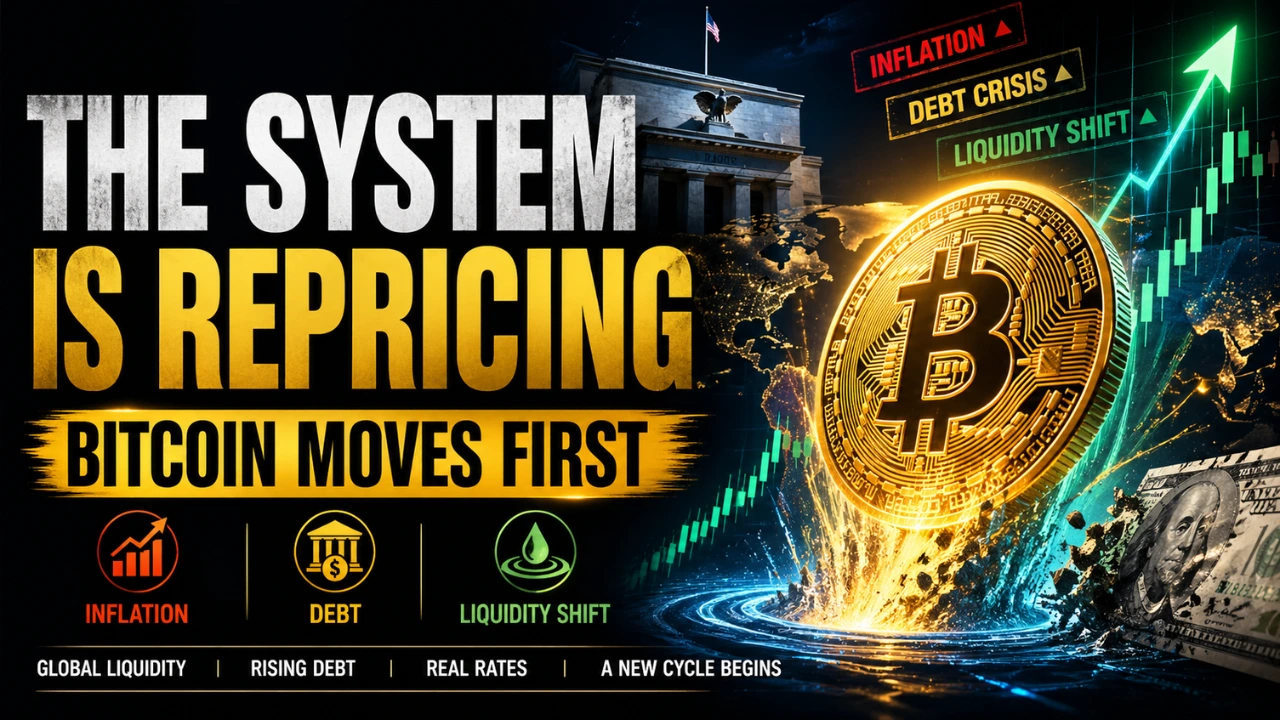
A pause on rates reveals less about control, and more about constraint
The Federal Reserve has chosen to wait.
Interest rates remain on hold, officials signal patience, and the public message is one of balance. Inflation has cooled from its peak, the labour market remains resilient, and policymakers want more data before committing to a new direction.
On the surface, this is a moment of stability.
In reality, it may be something else entirely.
A Pause That Reflects Uncertainty, Not Confidence
Holding rates steady is often presented as neutrality. In practice, it tends to signal uncertainty.
Inflation is not fully defeated, but it is no longer accelerating at the pace that justified aggressive tightening. Growth has slowed, but not enough to force immediate easing. The result is a narrow corridor where doing nothing appears to be the safest option.
Yet beneath that balance sits a deeper tension.
If inflation proves sticky, rates may need to stay elevated longer than markets expect. If growth weakens, the pressure to cut will build quickly. Policymakers are no longer steering freely. They are managing competing risks.

The Real Constraint Is No Longer Inflation Alone
What has changed is not just the inflation outlook. It is the broader context in which policy is being made.
Debt has become central to the equation.
Higher interest rates now carry a direct cost to the system, increasing government borrowing expenses and tightening financial conditions across households and businesses. Keeping rates elevated is no longer a purely anti-inflation decision. It is a trade-off that affects the stability of the system itself.
At the same time, divisions within policy circles are becoming more visible. Some officials remain focused on ensuring inflation is fully contained. Others are increasingly aware of the risks of overtightening into a slowing economy.
The result is not indecision, but constraint.
Markets Are Interpreting the Pause Differently
While the Fed signals patience, markets are beginning to price something else.
A pause is not just a pause. It is often the final stage before a shift.
Investors understand that policy rarely remains static for long. The longer rates are held at restrictive levels, the greater the pressure that builds beneath the surface. Credit conditions tighten, refinancing becomes more expensive, and economic momentum slows.
At some point, the balance tips.
That tipping point is rarely announced in advance. It is anticipated.

Why the Reaction Is Showing Up in Bitcoin
Bitcoin is increasingly part of how markets express that anticipation.
It is not responding to a rate cut that has already happened. It is responding to the probability of one.
Bitcoin tends to move with expectations of liquidity rather than confirmed policy. When markets begin to believe that financial conditions will ease, even if inflation remains unresolved, it often reacts earlier than traditional assets.
This does not make it a perfect indicator. It remains volatile and sensitive to sentiment. But it does make it a revealing one.
In an environment where policy is constrained, expectations become more important than actions.
A System Adjusting, Not Breaking
The current moment is not defined by crisis.
It is defined by limits.
Energy markets remain unpredictable. Inflation is uneven. Debt is shaping policy in ways that were less visible in previous cycles. And global financial flows are becoming more complex.
The Federal Reserve still holds significant influence. But it is no longer operating in a system where outcomes can be guided as cleanly as before.
That is what markets are beginning to recognise.

What Comes Next
The most likely outcome is not a dramatic shift, but a gradual one.
Rates may stay on hold longer than expected. When they move, they may do so into an environment where inflation has not fully returned to target. Liquidity may begin to expand even as price pressures remain uneven.
This is not a contradiction. It is a reflection of constraint.
For investors, it means the next phase of the cycle may not look like the last.
Clarity will arrive slowly. Signals will be mixed. And markets will continue to move ahead of official confirmation.
That is already happening.
The Fed has paused.
But the system has not.
Recommended reading:
Bitcoin Is Front-Running the Next Money Printing Cycle
The Post-Powell World: How a Warsh-Led Fed Could Reset Markets, Bitcoin, and the Dollar System
The Fed’s Crypto Playbook: How Central Bank Actions Create Trading Opportunities
Inside the Fed’s Decision to End Balance Sheet Runoff
Bitcoin’s 2026 Supercycle: Will It Hit $150K Amid Global Inflation?
How To Build a Portfolio for Oil Shocks, Inflation, and Geopolitical Risk in 2026





