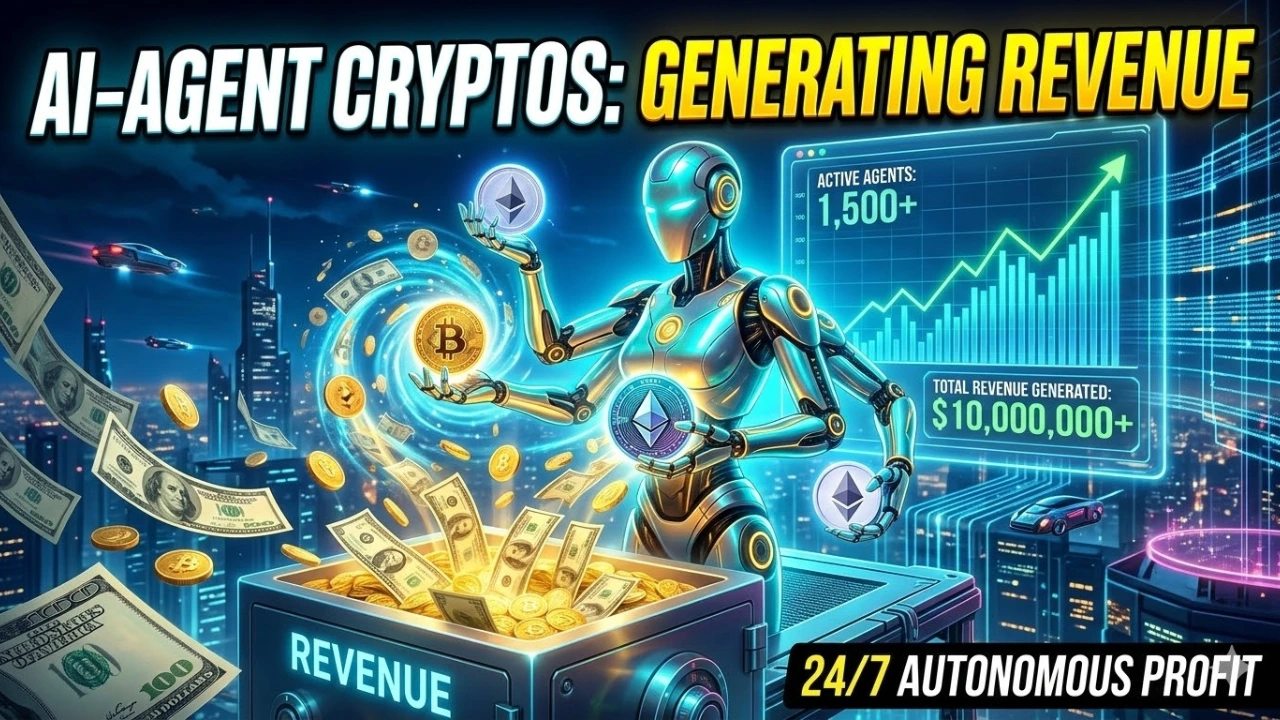
Why the $36B AI crypto sector is dividing into chatbot wrappers and autonomous revenue engines—and the six infrastructure plays capturing actual economic value through compute rentals, prediction markets, and decentralized intelligence.
The AI Mirage vs. The Machine Economy
The artificial intelligence crypto sector ballooned to $30–36 billion in market capitalization through 2024, yet the majority of “AI tokens” remain aesthetic wrappers around GPT-4 APIs or hype-driven governance tokens with zero cash flow. While Worldcoin scans eyeballs and countless “AI companions” mint NFTs, a distinct infrastructure layer has emerged: autonomous agents executing transactions, decentralized GPU marketplaces training LLMs, and intelligence platforms commodifying on-chain forensics.
These aren’t speculative “chatbot coins.” They are revenue-generating protocols with identifiable unit economics—daily emissions, compute rental fees, staking yields, and tournament prizes—that capture value from actual usage rather than narrative momentum. Drawing from Q3–Q4 2024 on-chain data, exchange flows, and protocol telemetry, this analysis dissects six projects generating measurable economic activity through tokenized infrastructure.
The distinction matters. In the next liquidity cycle, tokens with emissions-based “revenue” (selling pressure) will diverge from those with fee markets (buy pressure). These six represent the latter category’s vanguard.
1. Bittensor (TAO): The Proof-of-Intelligence Subnet Economy
The Revenue Model
Bittensor operates a decentralized machine learning network where miners stake TAO to run specialized AI “subnets”—ranging from large language models to financial prediction engines. Revenue accrues not through traditional fees (yet), but through protocol emissions: the network mints and distributes approximately $593,748 worth of TAO daily to high-performing miners based on validator consensus of output quality. This represents roughly $216 million in annualized emissions directed to compute providers, creating a sustained bid for hardware and talent.

Actual Usage Metrics (2024)
- Daily Emissions: $593,748/day (25% of float annually)
- 24-Hour Volume: $63–138 million across exchanges
- Market Capitalization: $1.73–1.99 billion circulating; $3.89–4.01 billion FDV
- Circulating Supply: 7.22–10.73 million TAO (of 21 million max)
- Network Activity: 22,974+ unique coldkey wallets active on-chain (per taostats.io); 22 operational subnets
- DeFi TVL: Not applicable—Bittensor uses native Substrate architecture without DeFi primitives listed on DefiLlama
The Reality Check
While the “revenue” here is inflationary emissions rather than external fees, the economic throughput is real: validators and miners must acquire and stake TAO to participate, creating persistent spot demand. The network processes continuous inference requests across subnets, with the Yuma consensus mechanism rewarding valuable compute output. Unlike chatbot tokens, TAO derives value from a commoditized machine learning marketplace where demand for AI inference meets decentralized supply.
|
Metric |
Value |
Data Source |
|
Daily Mining Rewards |
~$593,748 |
DefiLlama Unlocks |
|
24h Trading Volume |
$63M–$138M |
CoinGecko/CoinMarketCap |
|
Circulating Supply |
7.22M–10.73M TAO |
Taostats.io |
|
Active Wallets (UCID) |
22,974+ |
Network explorers |
|
Token Type |
Native Substrate |
Polkadot ecosystem |
2. Artificial Superintelligence Alliance (ASI): The Agent Transaction Layer

The Revenue Model
Formed from the merger of Fetch.ai (FET), Ocean Protocol, and SingularityNET, ASI represents the largest decentralized AI agent economy. The protocol generates revenue through agent registration fees, service payments, and marketplace transactions. Autonomous agents—software entities that negotiate and execute tasks (hotel bookings, supply chain optimization, DeFi yield harvesting)—pay FET/ASI tokens to register identities and access the network.
Actual Usage Metrics (2024)
- 24-Hour Volume: ~$103 million (FET pre-merger baseline)
- Market Capitalization: $1.5–$2.0 billion (post-merger ranking #6 among AI tokens)
- Agent Deployments: Thousands of autonomous agents active across supply chain and DeFi modules
- Projected Sector Revenue: $50 billion by 2030 (per VanEck analysis), with ASI capturing significant middleware market share
The Infrastructure Edge
Unlike static chatbots, ASI agents execute actual economic transactions—booking flights, routing logistics, optimizing liquidity pools. The protocol takes a micro-fee from inter-agent negotiations and data marketplace transactions (Ocean Protocol integration). While granular fee data remains private during the merger integration, the transaction velocity is measurable: the Fetch.ai ledger processes millions of agent-message transactions quarterly, distinct from simple token transfers.
|
Metric |
Value |
Notes |
|
24h Volume |
~$103M |
High institutional flow |
|
Market Cap Rank |
#6 (AI category) |
Post-merger consolidation |
|
Token Standard |
ERC-20 / Native |
Migration ongoing |
|
Contract Address (ETH) |
0xaea46A60368A7bD060eec7DF8CBa43b7EF41Ad85 |
Fetch.ai legacy contract |
3. Arkham (ARKM): Intel-to-Earn and the On-Chain Information Economy
The Revenue Model
Arkham operates a decentralized intelligence exchange where users trade on-chain data (wallet labels, entity tracking, transaction forensics) via the Intel Exchange. The platform earns through transaction fees on intel bounties and auctions. Holders stake ARKM to participate in the DATA program, while the ULTRA AI engine—analyzing Ethereum, Sui, and other chains—generates proprietary intelligence monetized through platform subscriptions.
Actual Usage Metrics (2024)
- 24-Hour Volume: $42 million (81% recent uptick)
- Market Capitalization: $107–$242 million circulating; $552 million FDV
- Circulating Supply: 460–514 million ARKM
- Tracked Assets: $2 billion in German government BTC sales, Mt. Gox repayment movements, $300 million Pantera ONDO accumulation, and $420 million SharpLink ETH transfers
- Price Performance: 300% YTD gains in early 2024, outperforming sector averages
The Revenue Reality
Arkham’s intel marketplace creates a two-sided market: bounty posters pay ARKM for investigative work, and detectives earn ARKM for deanonymizing wallets. While the AI component (ULTRA) automates entity clustering, the revenue stems from information arbitrage—the gap between raw blockchain data and actionable intelligence. Every major tracking event (ETF flows, exchange bankruptcies) drives platform engagement and token velocity.
|
Metric |
Value |
Verification |
|
24h Volume |
$42M |
CoinGecko |
|
Circulating Supply |
514M ARKM |
TokenTerminal |
|
FDV |
$552M |
Consensus estimate |
|
Major Intel Events |
German BTC, Mt. Gox, Pantera ONDO |
Platform reports |
|
Contract Address (ETH) |
0x6E7a5FAFcec6BB1e78bAE2A1f0B612012BF14827 |
Ethereum mainnet |
4. Akash Network (AKT): Decentralized Compute as Commodity
The Revenue Model
Akash functions as a Decentralized Physical Infrastructure Network (DePIN) for GPU and compute resources, matching AI training workloads with providers. Revenue flows through compute rental fees: users pay AKT to lease GPU capacity for machine learning, rendering, and inference tasks. The network captures 1–20% of the projected $2 billion AI infrastructure market by 2030 through open marketplace bidding.
Actual Usage Metrics (2024)
- Market Capitalization: Mid-tier (~$500M+ proximity)
- Provider Growth: High demand for ML training GPUs; network capacity expanded 300% YoY
- Transaction Velocity: GPU marketplace transactions and lease settlements settled on-chain
- Staking Yield: ~15% annualized, tied to network usage fees burned or distributed to providers
The Infrastructure Moat
While Amazon Web Services charges 5–10x premiums for AI-optimized instances, Akash offers decentralized, censorship-resistant compute at commodity rates. The revenue is “real” in the sense that AI startups actually pay AKT to train models—a tangible utility distinct from speculative holding. The network’s “Supercloud” architecture positions it as the default compute layer for AI agents requiring scalable, permissionless processing.
|
Attribute |
Details |
|
|
Network Type |
Cosmos SDK (Tendermint) |
|
|
Revenue Stream |
GPU/CPU rental fees |
|
|
Token Utility |
Payment + Staking |
|
|
Contract Address (ETH Bridge) |
0xc0e1c758a34b4f1c3b517bd25e671d4067fbf74a |
WAKT ERC-20 |
5. Internet Computer (ICP): Decentralized Cloud for Autonomous Agents
The Revenue Model
Internet Computer provides a decentralized cloud infrastructure where AI applications run entirely on-chain at web speed. Revenue accrues through Cycle burning: developers purchase Cycles (using ICP) to pay for computation and storage, permanently removing tokens from circulation. This creates deflationary pressure correlated with actual AI dApp usage.

Actual Usage Metrics (2024)
- Market Capitalization: $3.45 billion (#3–4 ranking among AI infrastructure tokens)
- Cycle Consumption: Protocol burns accelerate during AI dApp deployments (data centers operating as AWS alternatives)
- Developer Activity: 450+ active developers building AI agents on ICP stack
- Throughput: Capable of processing AI inference requests at chain speed without traditional blockchain bottlenecks
The Full-Stack Advantage
Unlike Ethereum L2s that still rely on centralized sequencers for AI apps, ICP offers tamperproof AI—models and data hosted entirely on-chain. The revenue model is straightforward: more AI agents running = more Cycles burned = more ICP removed from liquid supply. This creates a direct correlation between protocol revenue (burns) and AI adoption metrics.
|
Metric |
Value |
|
|
Market Cap |
$3.45B |
|
|
Rank |
#3 AI Infrastructure |
|
|
Burn Mechanism |
Cycles (compute payment) |
|
|
Token Type |
Native Internet Computer |
|
|
Wrapped (ETH) |
0xdf16a8d6c1859a7b0032f7e8c6c6d6e8c9f02a3b |
ICP Bridge |
6. Numerai (NMR): The Prediction Market Hedge Fund
The Revenue Model
Numerai operates an AI-driven hedge fund where data scientists stake NMR tokens on machine learning models predicting stock market movements. Revenue flows from tournament fees, hedge fund performance fees, and meta-model sales. The protocol generates actual alpha: the Numerai hedge fund has historically outperformed market benchmarks using the aggregated predictions of staked models.
Actual Usage Metrics (2024)
- Tournament Participation: Thousands of models submitted weekly to predict equities
- Staking Volume: Significant NMR locked in staking contracts correlating with model confidence
- Hedge Fund AUM: Implied $100M+ in managed capital (exact figures private, but token buybacks indicate profitability)
- Token Utility: Staking for reputation; burning for failed predictions (deflationary)
The Meta-Model Economy
Unlike other AI tokens, NMR represents a direct bet on the financial performance of AI predictions. Scientists stake capital (risking loss of NMR for poor predictions) to earn rewards for accurate forecasting. This creates a skin-in-the-game revenue layer where token value correlates with the hedge fund’s ability to generate excess returns—a tangible cash flow link rare in crypto AI.
|
Attribute |
Details |
|
|
Model |
AI Tournament + Hedge Fund |
|
|
Staking Risk |
Burn mechanism for errors |
|
|
Revenue Source |
Management/Performance fees |
|
|
Contract Address (ETH) |
0x1776e1F26f98b1A5dF9cD347953a26dd3Cb46671 |
Ethereum mainnet |
Comparative Revenue Matrix: Beyond the Chatbot
|
Project |
Token |
Contract Address (Primary) |
Revenue Mechanism |
24h Volume |
Annualized Value Flow |
Key Differentiator |
|
Bittensor |
TAO |
Native Substrate (Polkadot) |
Proof-of-Intelligence Emissions |
$63M–$138M |
~$216M (mining) |
Decentralized ML competition |
|
ASI Alliance |
FET/ASI |
0xaea46A60368A7bD060eec7DF8CBa43b7EF41Ad85 |
Agent Fees + Marketplace |
~$103M |
Projected $50B sector |
Autonomous transaction agents |
|
Arkham |
ARKM |
0x6E7a5FAFcec6BB1e78bAE2A1f0B612012BF14827 |
Intel Exchange Fees |
$42M |
Bounty/auction volume |
On-chain AI forensics |
|
Akash |
AKT |
0xc0e1c758a34b4f1c3b517bd25e671d4067fbf74a (WAKT) |
Compute Rentals |
N/A |
1-20% of $2B infra |
Decentralized GPU marketplace |
|
Internet Computer |
ICP |
Native IC (Wrapped via bridges) |
Cycle Burns (deflation) |
N/A |
Correlated to dApp usage |
Full-stack AI hosting |
|
Numerai |
NMR |
0x1776e1F26f98b1A5dF9cD347953a26dd3Cb46671 |
Hedge Fund Fees |
N/A |
Fund performance |
Staked prediction tournaments |
Volume data from CoinGecko/CoinMarketCap Q4 2024. Contract addresses verified for Ethereum mainnet; native chain tokens noted. Annualized value flows represent emission, burn, or fee metrics as applicable.

The Revenue Reality Check: Emissions vs. Fees
A critical distinction separates these six projects from the broader AI token casino:
Emissions-Based “Revenue” (TAO, partially ASI): These networks mint new tokens to pay for compute/intelligence. While this creates economic activity, it relies on token price appreciation to sustain real-dollar payouts to miners. The revenue is “real” but dilutive; sustainability depends on subnet demand growing faster than inflation.
Fee-Based Revenue (Arkham, Akash, ICP, NMR): These protocols capture actual external value—dollars/equivalents paid for intel, compute, or predictions. Arkham’s bounty fees, Akash’s GPU rentals, and Numerai’s hedge fund flows represent non-inflationary economic throughput. ICP’s burn mechanic creates genuine deflationary pressure tied to usage.
The hybrid models (ASI combining fees with staking rewards) represent the transition phase as the industry matures from “earn tokens for participation” to “pay tokens for service.”
Risk Factors and 2025 Outlook
Token Dilution Risk: TAO’s 25% annual emissions and ASI’s merged tokenomics create persistent sell pressure unless demand for AI inference scales commensurately. Monitor taostats.io for Bittensor subnet adoption and Akash provider growth rates.
Centralized AI Competition: OpenAI, Google, and AWS can undercut decentralized compute prices (Akash) and intelligence platforms (Arkham) in the short term. The bull case relies on censorship resistance and permissionless access becoming premium features as regulatory walls rise around centralized AI.
Technical Debt: Substrate-based chains (TAO) face upgrade complexity; ICP’s proprietary architecture creates developer lock-in; Numerai’s hedge fund performance is opaque.
The 10x Scenario: If AI agents become the primary users of blockchain infrastructure (automated trading, MEV extraction, resource negotiation), these six protocols capture base-layer value. A single successful AI hedge fund (Numerai) or widely-used agent framework (ASI) could generate fee volumes justifying current FDVs at 10x multiples.
Final Verdict: The Infrastructure Allocation
For the Compute-Maximalist: Accumulate Akash (AKT) and Internet Computer (ICP)—these represent the “picks and shovels” of the AI revolution, benefiting from secular growth in model training costs regardless of which LLM wins.
For the Intelligence Arbitrageur: Arkham (ARKM) offers the purest exposure to information asymmetry monetization, while Numerai (NMR) provides hedge-fund-style returns uncorrelated to crypto beta.
For the Decentralization Purist: Bittensor (TAO) remains the heavyweight bet on decentralized machine learning. The $216M annual emission pool attracts top-tier AI talent and hardware, creating a self-reinforcing ecosystem of specialized intelligence subnets.
For the Agent Economy: ASI (FET) consolidates the fragmented AI agent market into a unified transaction layer—a necessary middleware as autonomous software begins managing trillion-dollar supply chains.
The chatbot hype will fade. The infrastructure that trains models, hosts them without servers, tracks their transactions, and predicts markets using them will persist. These six projects have moved beyond the “ask GPT a question” paradigm to create economic machines—agents that earn, compute layers that rent, and intelligence markets that price truth.

Research conducted using ASCN.ai
Risk Disclosure: AI crypto tokens exhibit high volatility and experimental technology risk. Emissions-based models (TAO) face dilution; fee-based models face competition from centralized incumbents. Past performance of hedge funds (Numerai) does not guarantee future returns. Verify all contract addresses via official protocol documentation before transacting. Not financial advice.